The Cancelled Flight
Short story about releasing the need to know what tomorrow will bring.
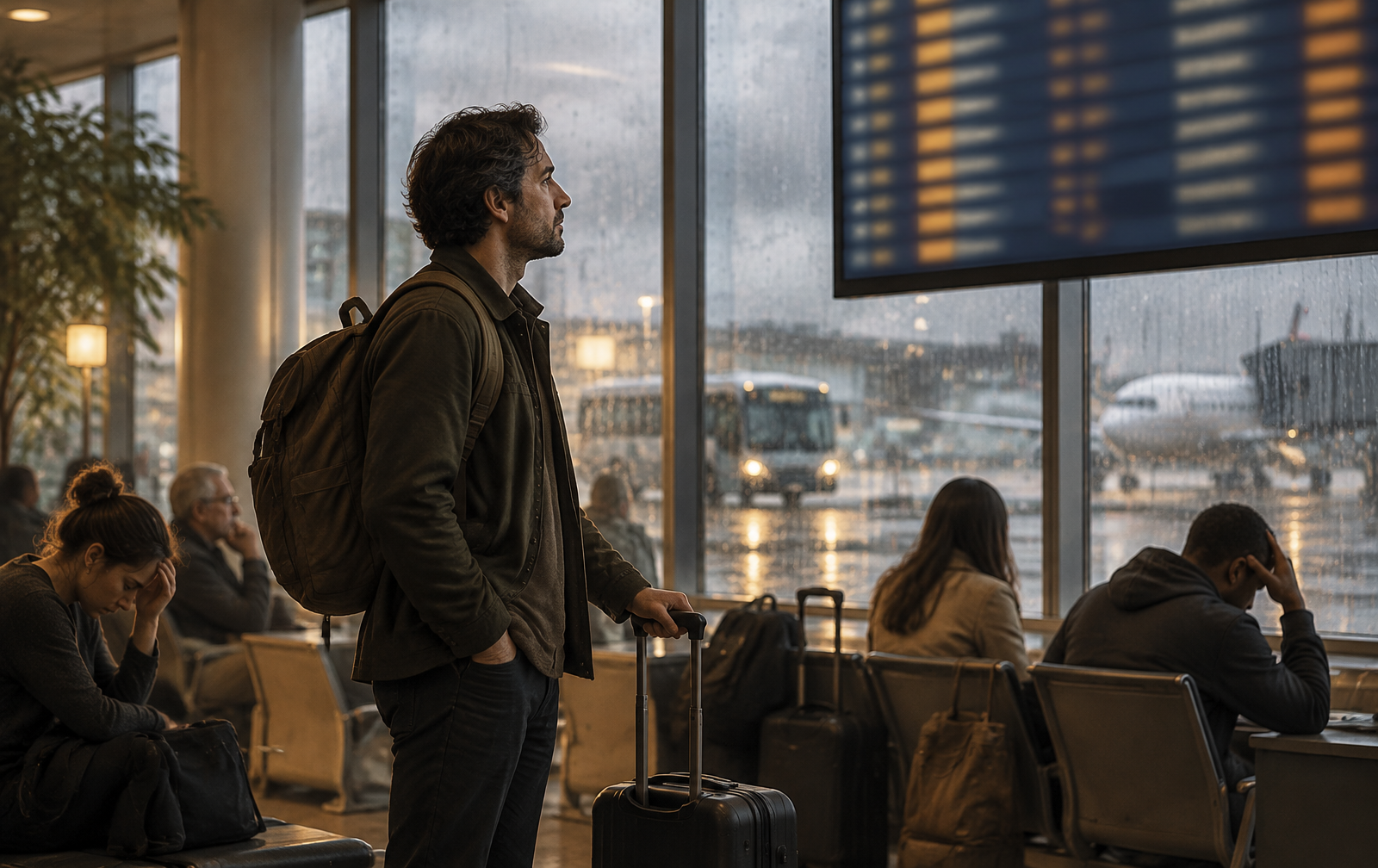
After two years of barely taking any time off, Leo had planned this week down to the smallest detail.
A small hotel by the sea. A trail through the mountains. A restaurant he had booked two months in advance.
At the departure gate, one red word appeared on the screen:
CANCELLED.
He stood there without moving.
Around him, people were already raising their voices. Someone demanded to speak to a manager. A woman nearby called her husband, angrily explaining how they had "ruined their vacation."
Leo felt the same anger rising inside him.
Then he remembered something his father used to tell him when he was a boy:
"When something goes wrong, ask yourself first: is this still in your hands?"
The flight wasn't.
The vacation he had planned wasn't.
But the next hour was.
He picked up his bag and walked out of the terminal.
Outside, it was raining.
Instead of going home, he boarded the first bus leaving the airport. He had no idea where it was going.
An hour later, he stepped off in a small town he had never visited.
He found a room for the night, walked through the rain without a destination, and ate dinner somewhere that had never appeared on any itinerary he had made.
Before falling asleep, he opened his phone.
The carefully planned itinerary was still there.
Leo looked at it for a long moment — and deleted it.
Not because he had given up on the vacation.
Because he realized that the only thing truly cancelled that day was his need to know what tomorrow would bring.
Sometimes what gets cancelled isn't the journey — but the illusion that we control it.
Epictetus, Enchiridion 1
“Some things are within our control, and others are not.”
A modern fictional Ohananda story inspired by Epictetus and the opening teaching of the Enchiridion. Leo and the cancelled flight are not historical and do not appear in an ancient Stoic text.
Epictetus begins the Enchiridion by drawing a boundary: our judgements, intentions and responses can belong to us; events, other people and outcomes often do not.
The distinction is not a promise that disappointment will vanish. It is a practice of returning our energy from what has already happened to the next response that is genuinely ours.
What is not in your hands now — and what is the next response that still is?