The Caravan That Lost Its Way
Short story about the sentence that has to be said out loud.
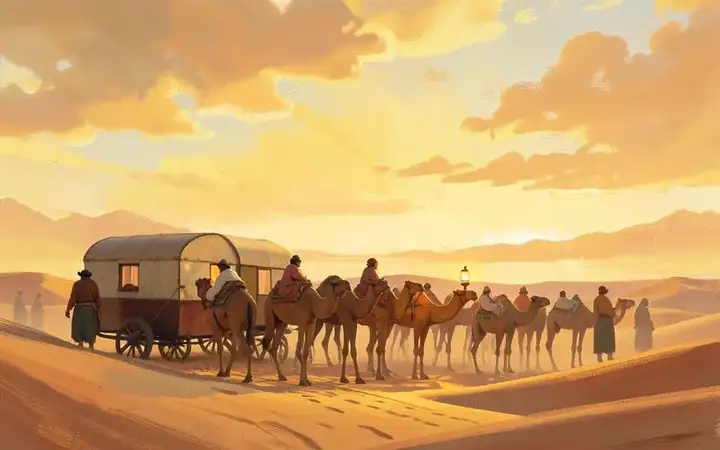
By the fourth day the arguing had stopped, which everyone quietly agreed was worse than the arguing. Twenty-two men, sixty camels, and at least four days south of where they were meant to be.
That night somebody finally remembered the old man riding at the back with the salt traders, the one who never joined the shouting.
He listened to the whole account without interrupting, then said, "Yes. You are lost."
"We know we're lost. We've known for two days."
"No, you don't. For four days each of you has been telling a story in which someone else is at fault and the right road is just behind your own shoulder, if only the fool beside you had listened. Being lost is a place you arrive at. None of you have gotten there yet."
There was a long silence. Then the guide — silent himself since the second day, ashamed to speak — said out loud, for the whole camp to hear: "I do not know where we are."
Something went out of the group with that one sentence. Not hope, exactly. Pressure.
Only then did they pool what they actually had, instead of what they wished were true: birds flying a certain way at evening, a particular shape along the ridge, ground that had been sloping gently downward for two days, which nobody had mentioned because it fit nobody's favourite theory of where they'd gone wrong.
They found water a day and a half later.
You cannot be found until you can say out loud where you actually are.
Sufi teaching stories on the path (tariqa) and the guide
Inspired by the Sufi tradition of the teaching story and its treatment of the path and the guide; the caravan and its characters are Ohananda's own.
Sufi literature is full of caravans, wrong turnings and guides, because the word for the path — tariqa — is also the word for the tradition itself.
This story turns on one refusal: the refusal to admit not knowing. Almost every tradition treats that admission as the first real step, and almost all of us resist it for as long as we can manage. The old man gives no directions. He supplies only the condition under which the group can finally use what it already knows.
Questions & answers
+What is the message of "The Caravan That Lost Its Way"?
You cannot be found until you can say out loud where you actually are. Sufi literature is full of caravans, wrong turnings and guides, because the word for the path — tariqa — is also the word for the tradition itself. This story turns on one refusal: the refusal to admit not knowing. Almost every tradition treats that admission as the first real step, and almost all of us resist it for as long as we can manage. The old man gives no directions. He supplies only the condition under which the group can finally use what it already knows.
+Is this a true story?
Inspired by the Sufi tradition of the teaching story and its treatment of the path and the guide; the caravan and its characters are Ohananda's own.
+Which wisdom tradition inspired this story?
Sufism — Sufi teaching stories on the path (tariqa) and the guide. The path of the lover.
What are you pretending to know your way through?