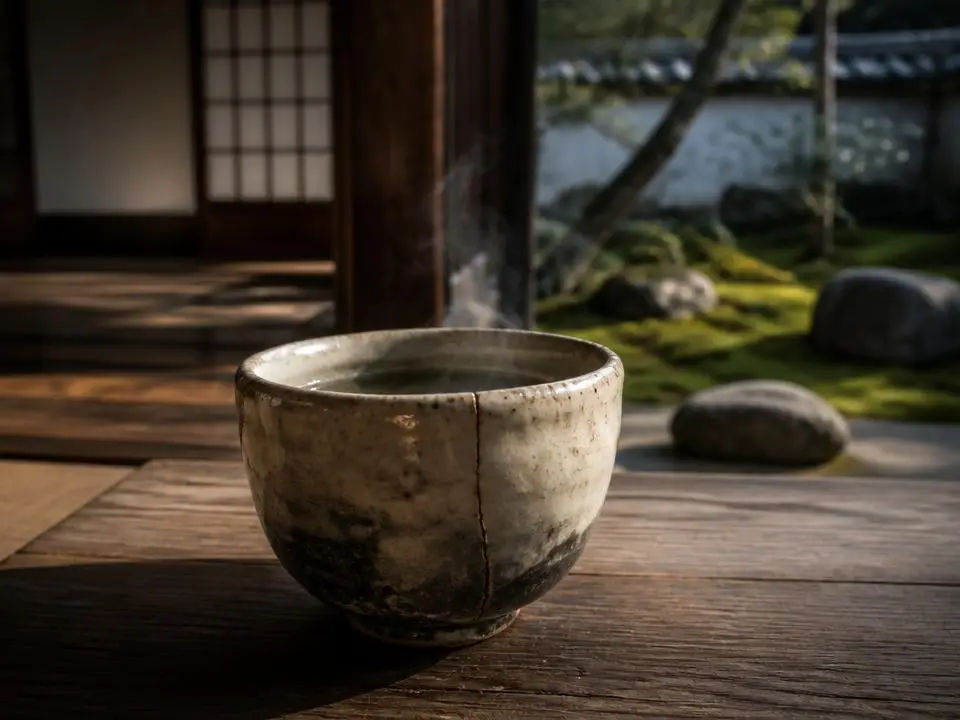
The Last Cup
Short story about discovering that love was never inside what remained.

When Adam's wife died, he couldn't bring himself to move her cup.
Every morning, he made coffee for himself, and her cup remained beside him on the shelf — white, with a small crack in the handle. Exactly where she had left it for the last time.
Months passed.
One day, his daughter suggested putting it away in the cupboard.
“No,” Adam answered too quickly. “Leave it.”
As though if the cup remained, some part of her would remain with him.
One morning, while cleaning the kitchen, his elbow struck the shelf.
The cup fell.
He reached for it, but heard the sound before he understood what had happened.
Three white pieces lay on the floor.
Adam sat down beside them.
At first, he was angry with himself. Then he cried — not for the cup, but for her. For her voice coming from the other room. For the way she used to warm her hands around her coffee. For all the things he had believed might never disappear if only he protected them carefully enough.
After a while, his daughter came in and found him there.
“I'm sorry, Dad.”
Adam picked up one of the pieces and looked at it.
“All this time, I was afraid of losing her again,” he said. “But she was never inside the cup.”
He placed the broken piece in his daughter's palm.
Then, for the first time since she died, he opened the window.
The morning air came in.
Sometimes we hold on to what remains until we forget that the love has already become part of us.
Dhammapada 277
“Sabbe saṅkhārā aniccā. — All conditioned things are impermanent.”
An original Ohananda story inspired by Dhammapada 277 and the Buddhist teaching of impermanence. Adam, his daughter and the broken cup are fictional and do not appear in the Dhammapada.
The Pali word aniccā points to the impermanence of conditioned things: whatever comes together through causes and conditions will also change and pass.
This does not diminish love or ask grief to hurry. It gently separates the love that has become part of us from the objects we fear must preserve it.
What are you holding because it feels like the only place your love can remain?