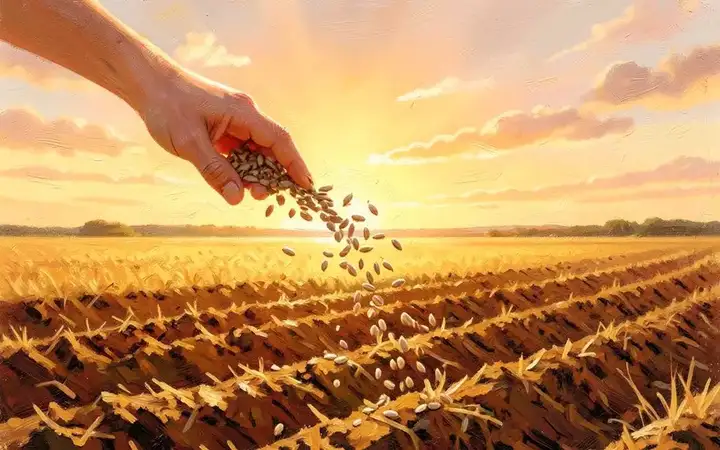
The Stone in the Road
Short story about the road we make for one another.
A king once wanted to know who truly lived in his kingdom.
Late one night, he went to the main road and placed several heavy stones across it. They did not completely block the way, but they forced every traveler to stop for a moment.
By morning, people began to arrive.
One man saw the stones and turned back.
Another stood before them angrily.
“How can the king allow this?”
Others simply squeezed around them and continued on their way.
And so the hours passed.
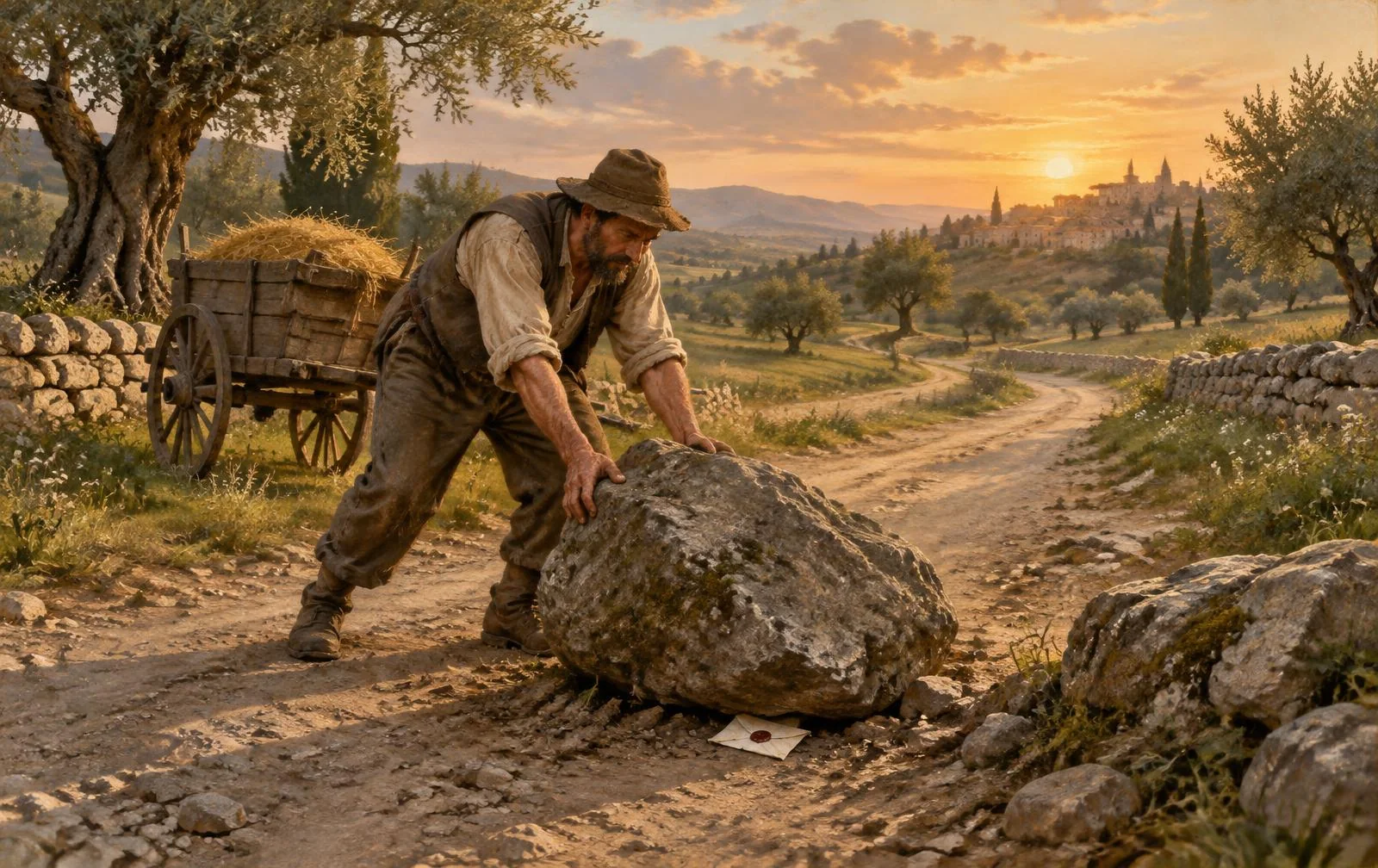
Toward evening, a farmer arrived with a loaded cart. He stopped before the stones, looked ahead, then looked behind him.
No one was there.
He could have turned back.
He could have gone around.
Instead, he rolled up his sleeves.
The first stone was heavy.
The second was heavier.
By the third, his arms were aching, but he continued.
Not because anyone had asked him.
Not because anyone was watching.
Simply because someone else would travel this road tomorrow.
When he moved the final stone, he noticed something beneath it.
A small letter sealed with the king’s mark.
He opened it.
“The road was open to everyone,” the king had written.
“But only you understood that the obstacle was part of it.”
The farmer folded the letter, climbed back onto his cart, and continued on his way.
This time, the road was clear.
Not only for him.
Sometimes what stands in our way is not keeping us from the path — it is the path.
Marcus Aurelius, Meditations 5.20
“What stands in the way becomes the way.”
An original fictional Ohananda story inspired by Marcus Aurelius, Meditations 5.20. The king, farmer and letter are not a historical account; the brief source line is a paraphrase of the Stoic idea, not a literal translation.
In Meditations 5.20, Marcus Aurelius writes that what impedes an action can itself advance the work. The obstacle is not always separate from the path we hoped to take.
The farmer does not know whether anyone will thank him. He acts because the road will be used again tomorrow — and in moving the stones, makes room for others too.
What might change if you met the thing in your way rather than going around it?