Where God Waits
Short story about divine love, compassion, and the heart that needs ours.
In an ancient Persian city lived a young woman named Layla.
Since childhood, Layla had dreamed of meeting God.
She read books of wisdom, studied ancient prayers, and sat for hours in silence each morning, hoping to hear His voice.
But the years passed, and God remained silent.
One day, she heard of an old dervish who lived in a cave beyond the mountains. People said that those who reached him with a pure heart might hear the voice of the Divine.
Layla packed a little bread and water and began her journey.
For three days, she walked through mountains and deserts.
On the fourth day, when she was nearing the cave, she heard someone quietly crying.
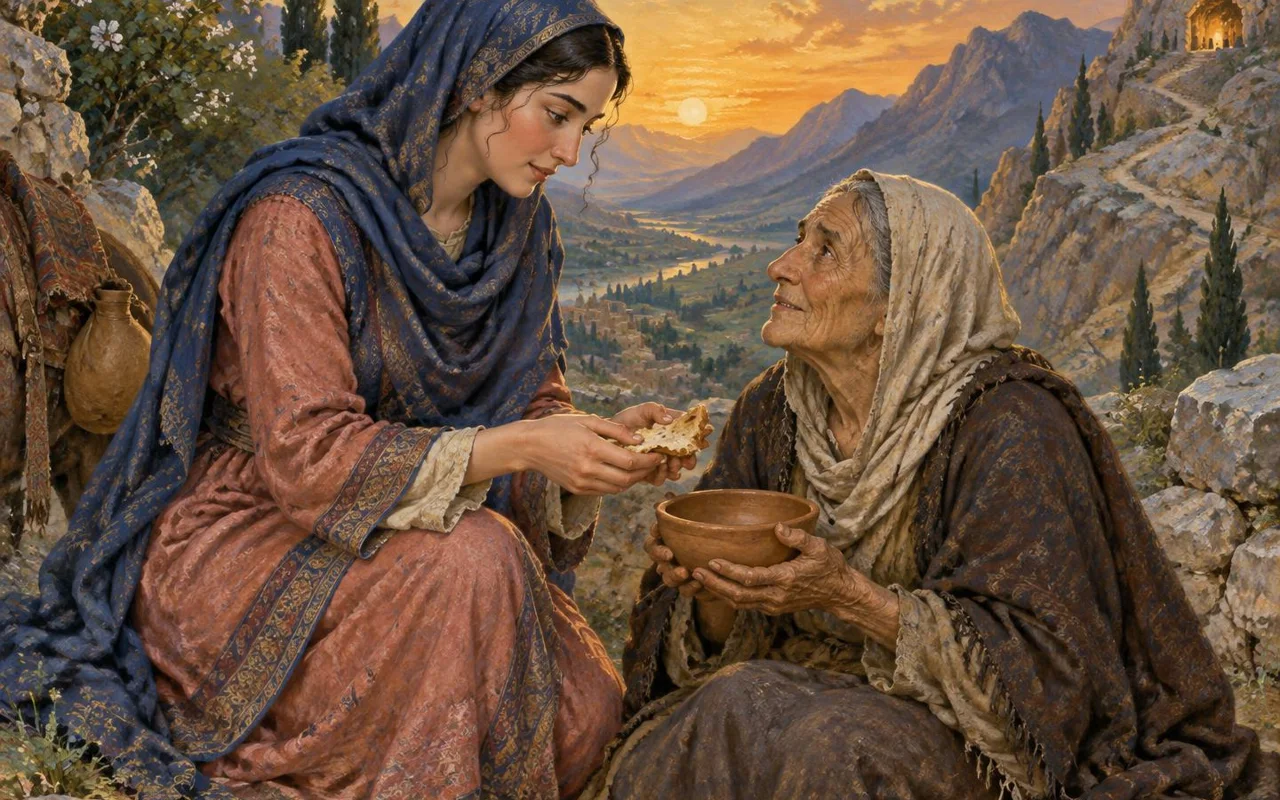
Beside the road sat an elderly woman holding an empty bowl.
"My daughter," the woman whispered, "I haven't eaten in two days. Do you have a little bread?"
Layla looked into her bag. Only one small piece remained.
She hesitated.
The journey had been long, and the cave was finally near. If she gave away her bread, she would have to continue hungry.
But something in the woman's eyes reminded her of her mother.
Layla sat beside her, divided the bread in two, and shared her water.
They ate in silence.
When they finished, the old woman took Layla's hands.
"May you find what you are searching for."
Layla smiled and continued on her way.
At sunset, she reached the cave.
The dervish sat at its entrance, his eyes closed.
"Master," Layla said, "I have traveled so far to hear the voice of God."
The old man opened his eyes.
"Then why did you not listen to Him?" he asked.
Layla was astonished.
"But I heard nothing."
The dervish smiled.
"This morning, on your way here, He asked you for bread."
Layla stood motionless.
"He sat beside the road," the old man continued, "holding an empty bowl, and called you 'my daughter.'"
Tears began to flow down Layla's cheeks.
"Then why," she whispered, "did I not recognize Him?"
The dervish looked at her gently.
"Because you were searching for a voice descending from heaven, not a heart that needed yours."
Layla sat quietly on the stone before him.
At last, she asked, "Then why did I travel all this way?"
The old man pointed toward the path she had taken.
"To discover that the holiest place on your journey was the place where you stopped."
The next morning, Layla began her journey home.
She no longer hurried.
In every person she encountered, she saw an entire world. In every outstretched hand, an opportunity to love.
When she reached the place where the old woman had been sitting, she stopped.
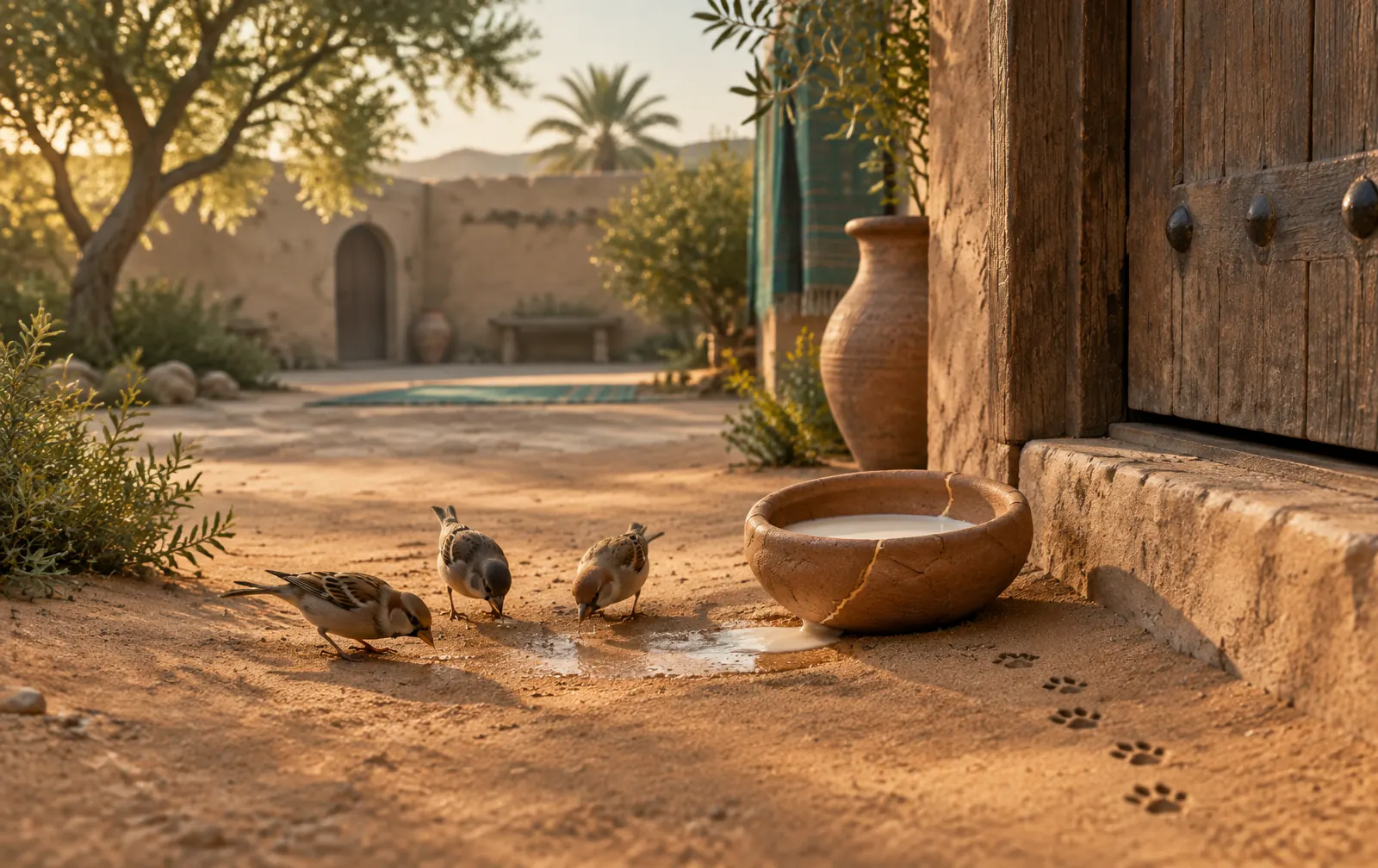
The empty bowl was still there, resting beside the road.
Layla gently picked it up.
This time, she did not see emptiness.
She saw something waiting to be filled.
For sometimes we travel far to find God, only to discover that He has been waiting for us all along in someone who needed our love.
Sufi wisdom — love and service to others
An original fictional Ohananda story inspired by Sufi wisdom. Layla, the elderly woman and the dervish are fictional characters; this is not a traditional or historical tale, and its dialogue is not an authentic quotation from Rumi or Rabia al-Adawiyya.
Inspired by the Sufi tradition, this story explores the idea that love and service to others are expressions of closeness to the Divine. In the spirit of Rumi and Rabia al-Adawiyya, spiritual love is not confined to prayer or contemplation. It becomes real through compassion for the person standing before us.
Questions & answers
+What is the message of "Where God Waits"?
Inspired by the Sufi tradition, this story explores the idea that love and service to others are expressions of closeness to the Divine. In the spirit of Rumi and Rabia al-Adawiyya, spiritual love is not confined to prayer or contemplation. It becomes real through compassion for the person standing before us.
+Is this a true story?
An original fictional Ohananda story inspired by Sufi wisdom. Layla, the elderly woman and the dervish are fictional characters; this is not a traditional or historical tale, and its dialogue is not an authentic quotation from Rumi or Rabia al-Adawiyya.
+Which wisdom tradition inspired this story?
Sufism — Sufi wisdom — love and service to others. The path of the lover.
Is there someone in your life who is waiting not for a grand gesture, but simply for you to stop for a moment and truly see them?