Zen
Direct pointing, before thinking.
Stories inspired from Zen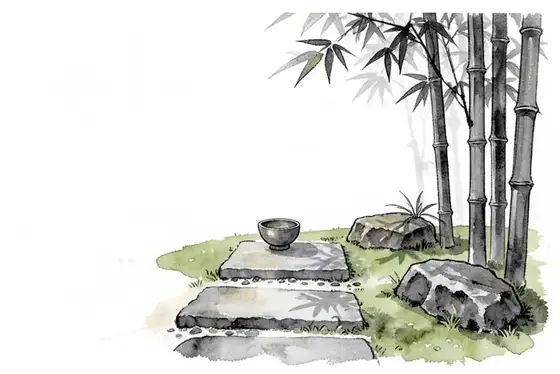
In simple words
Zen distrusts explanation. It came to China as Chan, absorbed Taoist plainness, and arrived in Japan with a preference for the bare and the immediate.
Its literature is mostly anecdote: a teacher answers a metaphysical question by pouring tea, or sweeping a path. The story is the argument.
Where it comes from
Legend gives Bodhidharma the founding role in the 6th century. The great collections of teaching stories — the Blue Cliff Record, the Gateless Gate — were compiled in China in the 11th–13th centuries.
Because Zen prizes transmission over doctrine, its history is a chain of encounters between people rather than a development of arguments.
Core ideas
- Zazen — just sitting
- Sitting without a goal. The absence of a goal is the practice, which is why it is difficult.
- Beginner's mind
- Expertise closes; a beginner's attention stays open. Zen keeps returning the student to not-knowing.
- This moment, exactly
- Enlightenment is not elsewhere. Carrying water, chopping wood.
What does this mean today?
Zen is the tradition most useful to people exhausted by self-improvement. Its stories refuse the premise that you must first become someone else.
Practically: fewer words, more attention. Do the dish you are washing.
Common questions
- What is the difference between Zen and Buddhism?
- Zen is a school of Mahāyāna Buddhism. It shares the Buddhist framework but emphasises direct experience and seated meditation over doctrinal study.
- Why does Zen use riddles?
- A kōan is not a puzzle with a hidden answer. It is designed to exhaust the mind's ordinary way of grasping, so that a more direct kind of seeing can appear.