The Monk Who Swept the Same Path
Short story about doing the thing that will need doing again tomorrow.
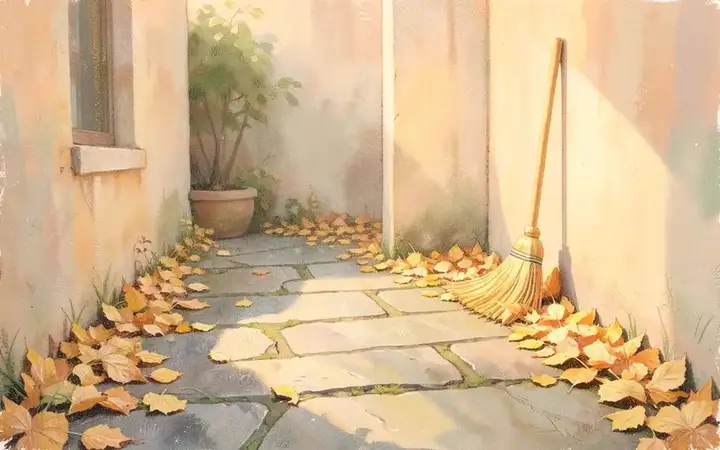
The monk had swept the forty paces between the gate and the hall every morning for thirty-one years. In autumn the task was frankly hopeless; the maples let go of their leaves all day long, and by evening the path looked exactly as it had at dawn.
A visitor watched him do this for three mornings running and finally couldn't hold his tongue. "By tonight it will be covered again. Why sweep at all?"
"Do you eat?" the monk asked, not looking up.
"Of course."
"By this evening you will be hungry again. Why eat?"
The visitor laughed — hunger, he said, was a need; a path was only a path, and an already-clean one at that.
The broom kept moving, unhurried, sounding like a slow tide going out. "When I was young I swept so the path would stay clean, and every autumn made me furious at the trees. Now I sweep because it is five o'clock, and the leaves and I have an arrangement neither of us questions anymore."
The visitor was given a stack of bowls to wash before he left. On the fifth morning, without quite deciding to, he washed eleven of them without narrating a single sentence to himself about washing bowls. It was, he realised afterward, the most peaceful eleven minutes he'd had in a year.
Not everything that returns tomorrow is a problem. Some things are simply life, repeating.
Zen monastic practice; “carry water, chop wood”
Inspired by Zen monastic work practice (samu) and the proverb about carrying water and chopping wood. The characters and dialogue are Ohananda's own.
Zen places ordinary work at the centre of practice rather than at its edges. Sweeping, cooking and washing are not chores on the way to meditation; they are the same activity with different objects.
The proverb runs: before enlightenment, carry water and chop wood; after enlightenment, carry water and chop wood. We treat repetition as failure. Zen treats it as the ordinary shape of being alive.
Questions & answers
+What is the message of "The Monk Who Swept the Same Path"?
Not everything that returns tomorrow is a problem. Some things are simply life, repeating. Zen places ordinary work at the centre of practice rather than at its edges. Sweeping, cooking and washing are not chores on the way to meditation; they are the same activity with different objects. The proverb runs: before enlightenment, carry water and chop wood; after enlightenment, carry water and chop wood. We treat repetition as failure. Zen treats it as the ordinary shape of being alive.
+Is this a true story?
Inspired by Zen monastic work practice (samu) and the proverb about carrying water and chopping wood. The characters and dialogue are Ohananda's own.
+Which wisdom tradition inspired this story?
Zen — Zen monastic practice; “carry water, chop wood”. Direct pointing, before thinking.
Which daily repetition are you resenting instead of inhabiting?