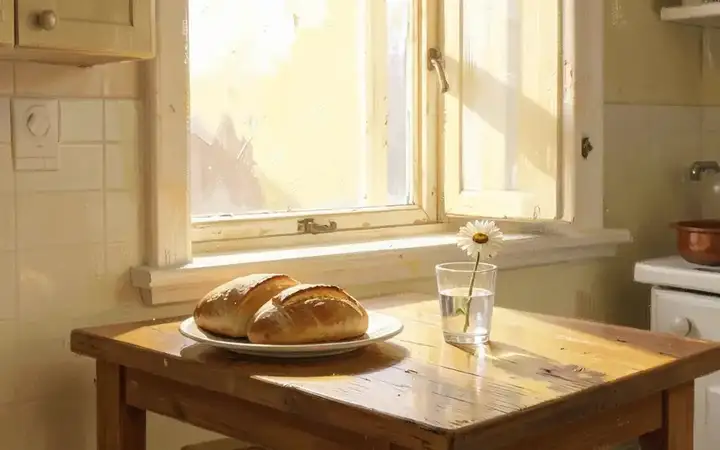
The Baker of Tzfat
Short story about being rich at four in the morning.
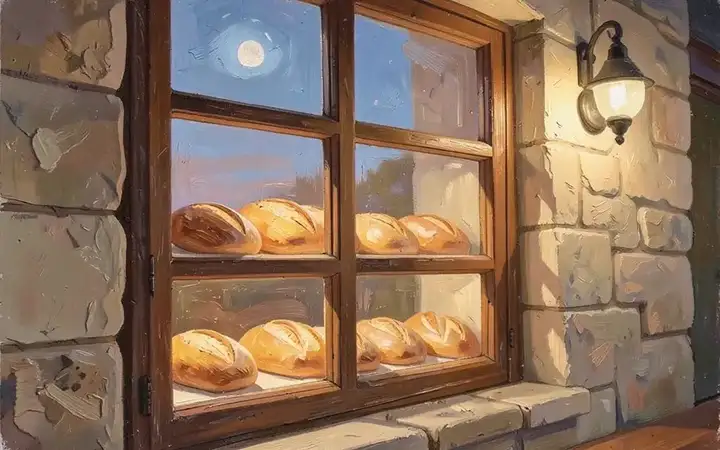
Two men on that street in Tzfat were awake at three in the morning.
One was the baker, lighting his oven. The other owned the building the bakery stood in, and four more besides, and could not sleep in any of them.
The landlord took to sitting on the low wall outside, because the warmth from the oven came through the stone.
One winter night he asked, in the flat voice men use at three in the morning: "Are you happy?"
"I'm warm," said the baker. "I have work in front of me. In two hours people I know by name will walk through that door. My wife will wake at six and tell me her dream before she tells anyone else." He turned the dough over. "What's the other kind of happy?"
"Something more than that."
"More of what, exactly?"
The landlord had five buildings' worth of answer sitting in his chest, and on a warm wall at three in the morning he could not get a single sentence of it out.
"You have less than me," he said finally, and it came out sounding like an accusation against himself.
"Yes," said the baker, not unkindly. "But we're both awake tonight, and I know why I am."
The landlord walked home before dawn, past two of his own buildings, and let himself into neither.
Rich is not a number. It is the distance between what you have and what you still require.
Pirkei Avot 4:1
“Who is rich? The one who is happy with their portion.”
The quoted line is a common English rendering of Pirkei Avot 4:1 (Mishnah). The story of the baker and the landlord is Ohananda's own.
Pirkei Avot asks four questions in a row — who is wise, who is strong, who is rich, who is honoured — and answers each by relocating the quality inside the person.
Rich is not an amount. It is the relationship between what you have and what you are still demanding. This is not praise for poverty; Jewish wisdom is unsentimental about money. It simply declines to let wealth define richness.
Questions & answers
+What is the message of "The Baker of Tzfat"?
Rich is not a number. It is the distance between what you have and what you still require. Pirkei Avot asks four questions in a row — who is wise, who is strong, who is rich, who is honoured — and answers each by relocating the quality inside the person. Rich is not an amount. It is the relationship between what you have and what you are still demanding. This is not praise for poverty; Jewish wisdom is unsentimental about money. It simply declines to let wealth define richness.
+Is this a true story?
The quoted line is a common English rendering of Pirkei Avot 4:1 (Mishnah). The story of the baker and the landlord is Ohananda's own.
+Which wisdom tradition inspired this story?
Jewish Wisdom — Pirkei Avot 4:1. Argument, blessing, and the work of repair.
What would have to change for you to be content with your portion today?