The Chair by the Window
Short story about yom Kippur — forgiveness, release, and the permission to live again.
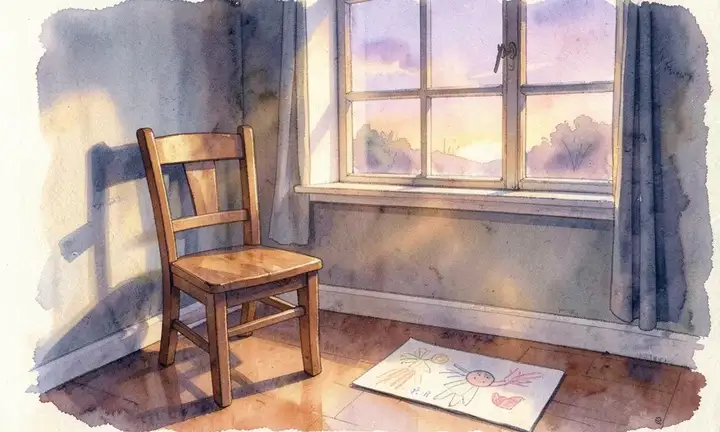
Every Yom Kippur, Michal sat in the same chair by the window. Not in synagogue. Not in front of a prayer book. Just by the window.
Eight years earlier she had said words to her mother she could not take back. It was a small argument — one of those that come from nowhere and suddenly grow too large. She slammed the door and left.
The next day her mother was hospitalised. A week later she died.
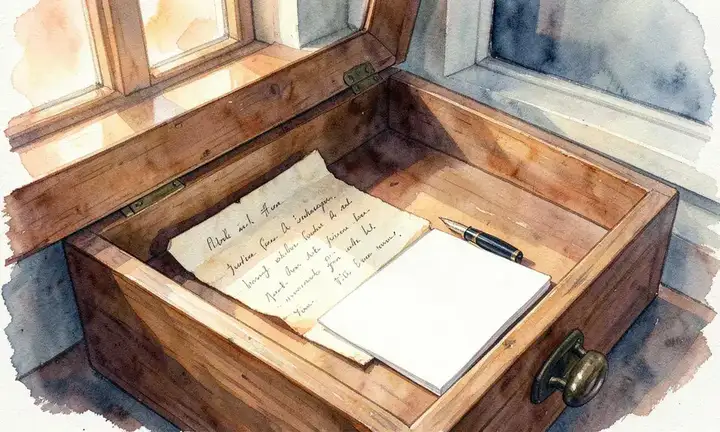
Since then, every Yom Kippur, Michal asked for forgiveness. In her heart. Out loud. In letters no one read. But something in her did not believe she was allowed to receive it.
That Yom Kippur her six-year-old daughter sat beside her. She saw her mother crying and asked, "Ima, why are you sad?"
Michal was quiet for a moment. "Because once I did something I'm very sorry for."
The girl thought about it. "And did you say sorry?"
"Yes."
"And did you mean it?"
Michal nodded.
"So why are you still punishing yourself?"
Michal looked at her. The girl had already gone back to her drawing, as if she had said nothing unusual.
For eight years Michal had believed forgiveness was something her mother had to give her. Suddenly she understood that all those years, she was the one refusing to take it.
She closed her eyes. And for the first time she did not ask her mother for forgiveness. She only whispered: "I miss you. And I want to live."
Outside, evening began to fall. And something inside her that had been closed for years softened. It did not disappear. It was not forgotten. It simply stopped being a prison.
Sometimes the deepest atonement is not erasing what happened — it is refusing to let one mistake decide who you will be for the rest of your life.
Don't let one mistake decide who you are for the rest of your life.
The spirit of Yom Kippur
Inspired by the spirit of Yom Kippur — confession, forgiveness, compassion, and the possibility of returning to life with a lighter heart. No wording here is presented as a quotation.
Yom Kippur is built around asking. But the day does not end with the request; it ends with the closing of the gates, and the assumption that the forgiveness was granted. The asking was never meant to be permanent.
Guilt that repeats itself every year has stopped being repair and become identity. Jewish tradition is strikingly practical here: make amends where you can, and then let the day close. Carrying it further does not serve the person you hurt. It only keeps you from living.
Questions & answers
+What is the message of "The Chair by the Window"?
Don't let one mistake decide who you are for the rest of your life. Yom Kippur is built around asking. But the day does not end with the request; it ends with the closing of the gates, and the assumption that the forgiveness was granted. The asking was never meant to be permanent. Guilt that repeats itself every year has stopped being repair and become identity. Jewish tradition is strikingly practical here: make amends where you can, and then let the day close. Carrying it further does not serve the person you hurt. It only keeps you from living.
+Is this a true story?
Inspired by the spirit of Yom Kippur — confession, forgiveness, compassion, and the possibility of returning to life with a lighter heart. No wording here is presented as a quotation.
+Which wisdom tradition inspired this story?
Jewish Wisdom — The spirit of Yom Kippur. Argument, blessing, and the work of repair.
What are you still punishing yourself for, long after you meant your apology?
Forgiveness you refuse to receive is still a door left closed.