The Letter in the Drawer
Short story about the Ten Days of Repentance — and the way back to what the heart already knows.
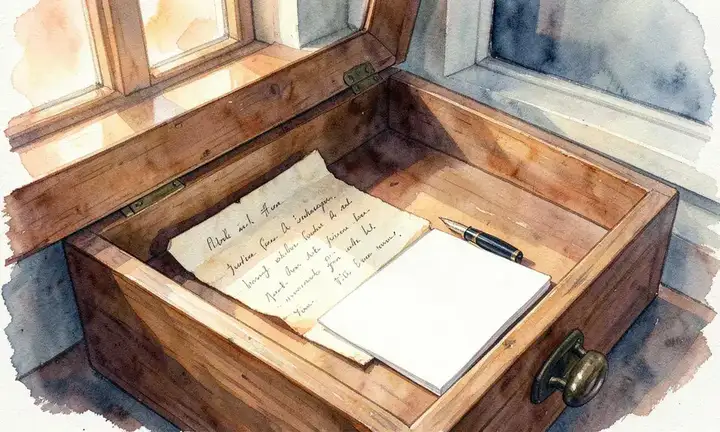
For seven years the letter stayed in the drawer.
Not a long letter. Just a few lines Uri wrote to his sister after their last argument.
He wrote: "I'm sorry."
Then he added an explanation. Then another explanation. Then an explanation of why she was also to blame.
By the end it no longer sounded like an apology. So he folded it and put it in the drawer.
Seven years passed. Now and then he came across it by accident. Read it. Closed it again.
One evening during the Ten Days of Repentance, he opened the drawer. This time he did not read the letter. He took a clean page.
And wrote only: "Too many years have gone by. I don't want to be right anymore. I want you in my life."
He looked at the page for a long time. There was no explanation in it. No defence. No attempt to win. Only the truth.
The next morning he drove to her.
When she opened the door, he forgot everything he had planned to say. So he simply said: "It took me a long time to come back."
She looked at him. And after a moment she answered: "Me too."
They did not repair seven years that morning. But something that had been closed began to open.
And sometimes that is all the return we need. Not to become a new person. Only to stop walking away from the person we already know we want to be.
Real teshuvah is not only regret for the road we took — it is the courage to choose the road back.
You do not have to become someone new. You only have to stop walking away from who you already want to be.
Teshuvah — the Ten Days of Repentance
Inspired by the idea of teshuvah in Jewish tradition — not only to regret, but to return. No wording here is presented as a quotation.
The Hebrew word teshuvah does not mean penance. It means return. The assumption underneath it is generous: you are not broken and in need of replacement — you have simply drifted from something that was already yours.
That is why the explanations weaken an apology. Every clause that defends us is a step further from the person we are trying to return to. Return is short, and it is usually the harder sentence to write.
Questions & answers
+What is the message of "The Letter in the Drawer"?
You do not have to become someone new. You only have to stop walking away from who you already want to be. The Hebrew word teshuvah does not mean penance. It means return. The assumption underneath it is generous: you are not broken and in need of replacement — you have simply drifted from something that was already yours. That is why the explanations weaken an apology. Every clause that defends us is a step further from the person we are trying to return to. Return is short, and it is usually the harder sentence to write.
+Is this a true story?
Inspired by the idea of teshuvah in Jewish tradition — not only to regret, but to return. No wording here is presented as a quotation.
+Which wisdom tradition inspired this story?
Jewish Wisdom — Teshuvah — the Ten Days of Repentance. Argument, blessing, and the work of repair.
Who are you still explaining yourself to, when a plain sentence would do?
The road back is usually shorter than the years we spent avoiding it.