The Man Who Was Always Angry
Short story about compassion without carrying another person's pain.
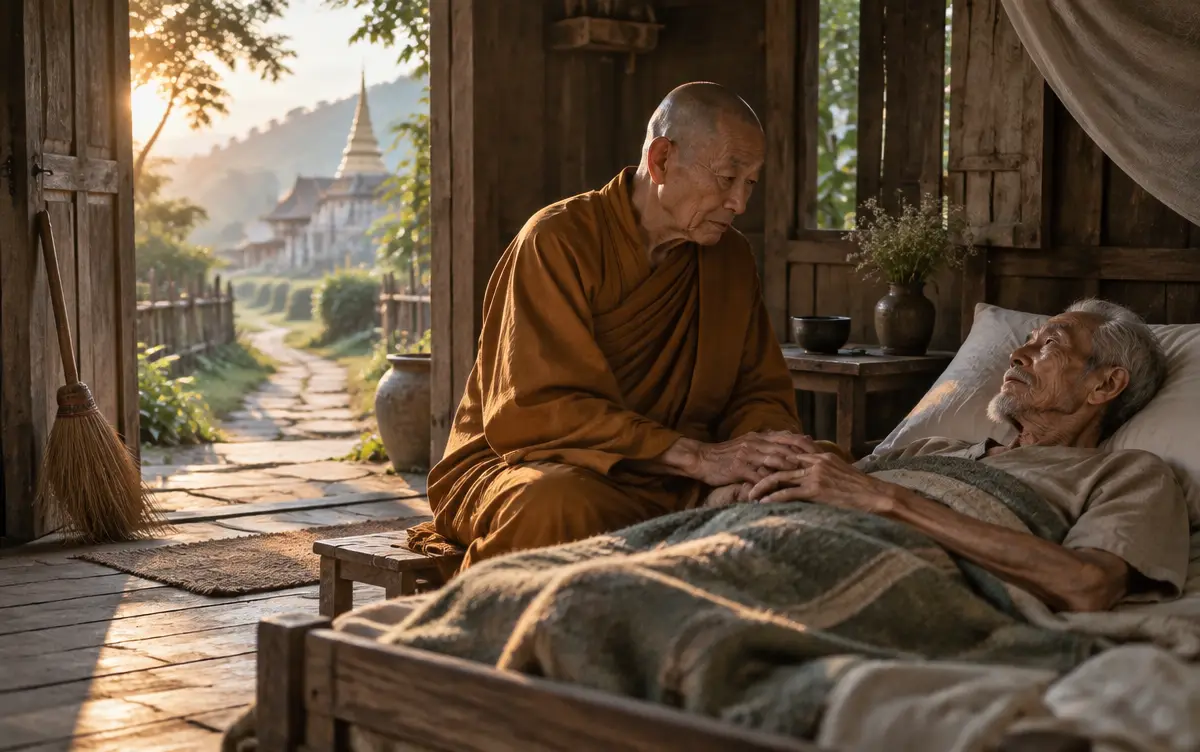
Every morning, an old man walked past the monastery.
And every morning, when he saw the monk sweeping the path, he would shout at him:
“You’ve wasted your life!”
The monk would smile and continue sweeping.
This went on for months.
Then one morning, the man did not come.
He did not come the next day either.
On the third day, the monk put down his broom and walked to the village to look for him.
He found the old man alone in his home, sick and weak.
The man stared at him in disbelief.
“After everything I’ve said to you — why did you come?”
The monk sat beside his bed.
“Every morning you brought me your pain,” he said.
“But just because you shouted it at me did not mean I had to carry it away with me.”
The old man was silent for a long time.
Then he asked quietly:
“So what did you do with it?”
The monk smiled.
“I left it where I found it. But I did not forget you.”
For the first time in years, the old man cried beside another person.
Compassion is not carrying another person’s pain — it is seeing the person hidden behind it.
Buddhist teachings on compassion and non-attachment
An original Ohananda story inspired by Buddhist teachings on compassion, non-attachment and not reacting automatically to anger. It is not a canonical Buddhist parable or a historical account.
Compassion does not require us to absorb every wound another person throws toward us. We can recognise the suffering beneath anger without turning that anger into our own burden.
Non-attachment creates room for both clarity and care: the monk leaves the pain where he meets it, yet he does not abandon the person who is hurting.
Whose pain might you see more clearly if you stopped carrying their anger?