The Empty Boat
Short story about the insult that was never sent.

Fog sat thick on the river that morning, so thick he could hear the water better than see it. A boat came out of the whiteness and struck his bow hard enough to slop water over his feet and nearly tip his basket of fish.
He was on his feet and shouting before he'd decided to be angry. Was the man blind? Drunk? Did he want to drown them both, out here where no one would hear it happen?
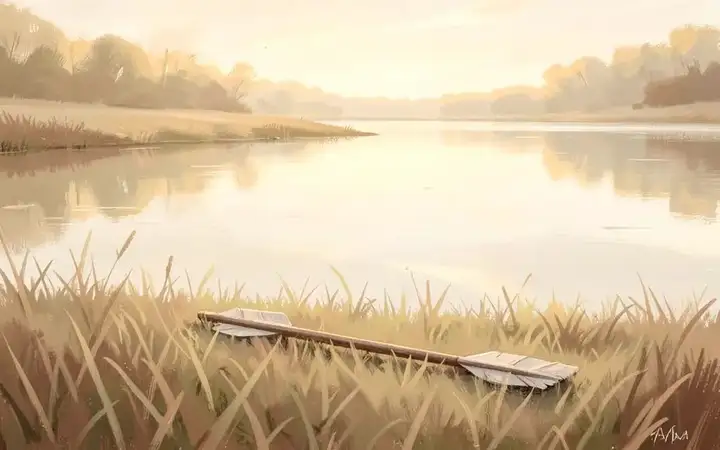
Then the fog thinned enough to see, and the boat was empty. No oarsman, no passenger — just a length of frayed rope trailing from the bow. It had slipped its mooring somewhere upriver hours ago and drifted down, patient as a leaf, striking whatever lay in its path.
He sat back down slowly. The collision had been identical. His feet were exactly as wet. Everything in the world had happened the same way twice.
Only he had been different.
That evening his wife said something sharp about the week's money, and the old familiar heat rose in his chest right on schedule, ready to fire back twice as hard. He caught himself waiting — one breath, no longer — and in that breath wondered, half seriously, how many of the boats that had struck him over the years had ever had anyone steering them at all.
He let the moment pass instead of returning it. She noticed. Neither of them said why.
Most of what strikes us is drifting, not aiming.
Zhuangzi, ch. 20 (the empty boat)
The empty-boat image comes from the Zhuangzi, chapter 20 — a Taoist classic. The riverman, his wife and the evening are Ohananda's additions.
The Zhuangzi's version is almost a proverb: if an empty boat collides with you, you do not get angry. If someone is steering it, you shout.
The collision never changes. Only the story about intention changes — and the anger lives entirely inside that story. Taoism asks a narrow, useful question: how much of what hit you today was actually aimed?
Questions & answers
+What is the message of "The Empty Boat"?
Most of what strikes us is drifting, not aiming. The Zhuangzi's version is almost a proverb: if an empty boat collides with you, you do not get angry. If someone is steering it, you shout. The collision never changes. Only the story about intention changes — and the anger lives entirely inside that story. Taoism asks a narrow, useful question: how much of what hit you today was actually aimed?
+Is this a true story?
The empty-boat image comes from the Zhuangzi, chapter 20 — a Taoist classic. The riverman, his wife and the evening are Ohananda's additions.
+Which wisdom tradition inspired this story?
Tao Te Ching — Zhuangzi, ch. 20 (the empty boat). The strength of what yields.
Which collision this week might have been an empty boat?