The Salt in the Water
Short story about looking for yourself and finding no edges.
The boy came home from twelve years of study certain of a great many things, which his father noticed before he had even put down his bag.
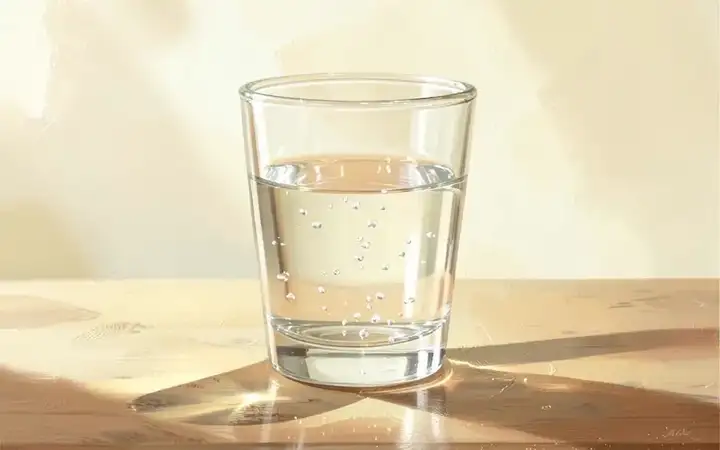
That evening, without saying why, the father dropped a lump of salt into a cup of water and left it on the windowsill overnight.
In the morning he handed his son the cup. "Bring me back the salt."
The boy turned the cup in the light, searching for a white edge that would tell him where to reach in. He tipped a little water into his palm and let it dry. Nothing. "It isn't there. It's gone."
"Taste it. From the top."
"Salt."
"From the middle."
"Salt."
"From the bottom."
"Salt," said the boy, and then he went quiet — not confused anymore, but beginning, for the first time all morning, to actually understand something.
"You could not find it as a lump," said his father, sitting down across from him, "because there was nowhere in that cup it was not. It didn't disappear. It became the water."
For twelve years the boy had been taught to find things — to separate one thing from another, to name it, to hold it up to the light and describe its edges. He looked at the cup for a long time before he drank the rest of it.
Some things can't be found because they were never somewhere else.
Chandogya Upanishad 6.13
“You are that.”
The salt-and-water dialogue between Uddalaka and Shvetaketu appears in the Chandogya Upanishad 6.13; the refrain tat tvam asi is usually rendered “you are that”. Ohananda's retelling adds domestic detail and dialogue not in the Sanskrit.
This is one of the oldest teaching stories in the world, and genuinely ancient: a father, Uddalaka, teaching his over-confident son.
The point of the salt is not that everything is vague. It is that the thing the boy was hunting for was not a thing at all — it was what the whole cup was made of. Tat tvam asi: you are that. What looks like losing yourself is described here as the end of a search.
Questions & answers
+What is the message of "The Salt in the Water"?
Some things can't be found because they were never somewhere else. This is one of the oldest teaching stories in the world, and genuinely ancient: a father, Uddalaka, teaching his over-confident son. The point of the salt is not that everything is vague. It is that the thing the boy was hunting for was not a thing at all — it was what the whole cup was made of. Tat tvam asi: you are that. What looks like losing yourself is described here as the end of a search.
+Is this a true story?
The salt-and-water dialogue between Uddalaka and Shvetaketu appears in the Chandogya Upanishad 6.13; the refrain tat tvam asi is usually rendered “you are that”. Ohananda's retelling adds domestic detail and dialogue not in the Sanskrit.
+Which wisdom tradition inspired this story?
Upanishads — Chandogya Upanishad 6.13. The turn inward.
What have you been searching for as if it were outside you?