The Wind and the Flame
Short story about a small flame, a great wind, and one night that is still its own.
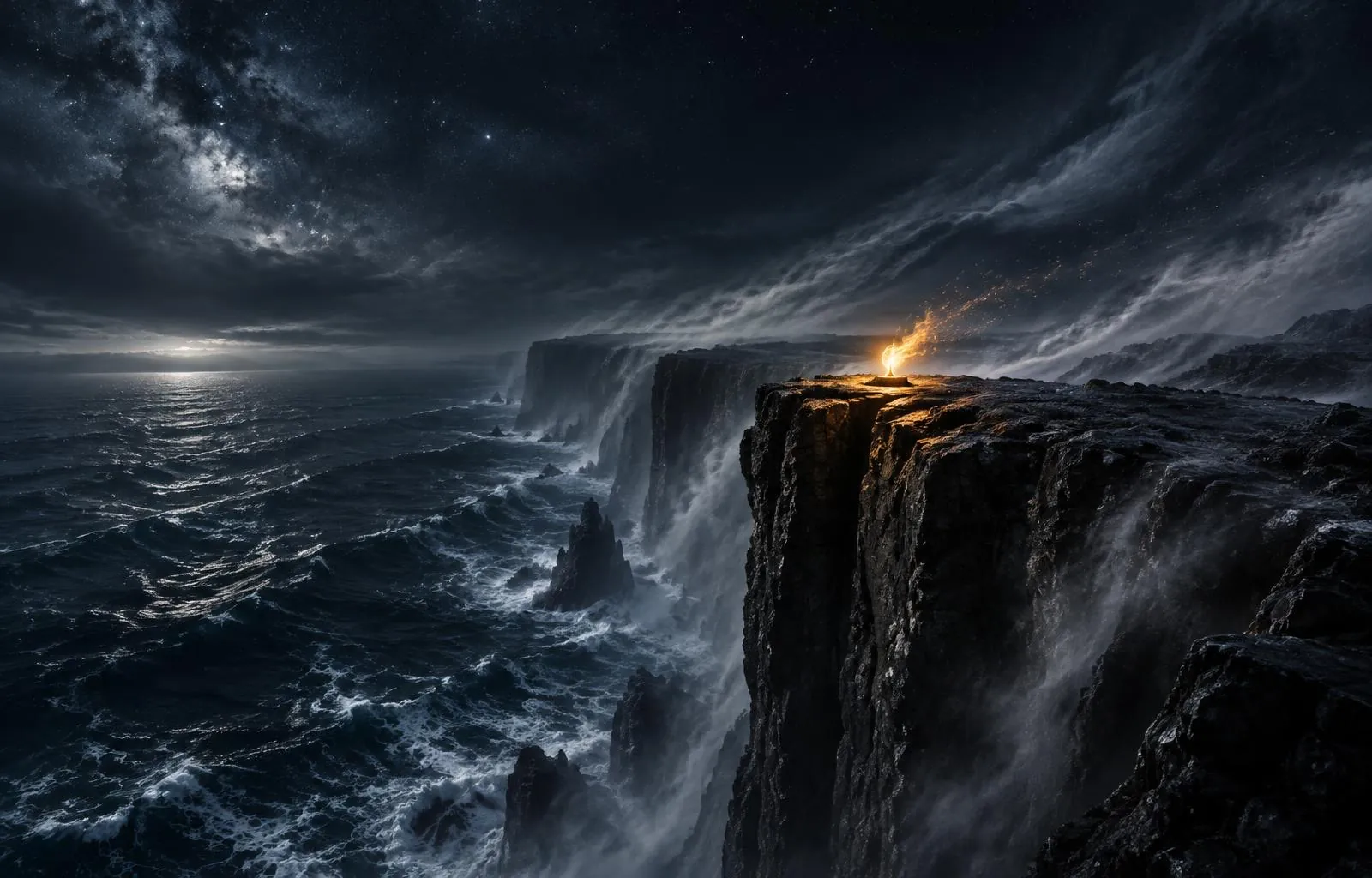
At the edge of a towering cliff, a small flame burned.
Every night, the wind came in from the sea, shaking the flame and trying to extinguish it.
"Why do you fight me?" asked the wind. "I am stronger than you. I could put you out with a single breath."
"I know," replied the flame.
"Then why aren't you afraid?"
"I am afraid."
The wind was surprised.
"And still, you keep burning?"
"What else can a flame do?"
The wind fell silent for a moment, then blew with all its strength.
The flame bent so low it almost disappeared.
But when the wind passed, it rose again.
"Do you think you can defeat me?" asked the wind.
"No," answered the flame. "One day, a wind too strong will come, and I will go out."
"Then what's the point?"
The flame looked out over the dark sea.
"See those rocks below? Every night, my light touches them. I don't know how many nights I have left, but this night is still mine."
For the first time in a thousand years, the wind had nothing to say.
It blew again.
This time, gently.
And the flame danced.
Courage is not believing that nothing can extinguish us. It is choosing to keep shining, even when we know we cannot burn forever.
Epictetus, Enchiridion 1; Marcus Aurelius, Meditations
An original, fictional Ohananda philosophical fable inspired by Epictetus and Marcus Aurelius on the limits of control, impermanence and courage. The wind and the flame are fictional characters; this is not an ancient Stoic parable or a historical source.
Inspired by Stoic wisdom: courage does not come from controlling what life brings, but from choosing how to live within what we cannot control.
The story draws on the teachings of Epictetus and Marcus Aurelius concerning the limits of control, acceptance of impermanence, and living with courage in the present moment.
The flame represents our capacity to act with purpose despite uncertainty. The wind represents external circumstances, change, and forces beyond our control.
The flame does not defeat the wind. It discovers that its purpose was never to defeat it.
Questions & answers
+What is the message of "The Wind and the Flame"?
Inspired by Stoic wisdom: courage does not come from controlling what life brings, but from choosing how to live within what we cannot control.
+Is this a true story?
An original, fictional Ohananda philosophical fable inspired by Epictetus and Marcus Aurelius on the limits of control, impermanence and courage. The wind and the flame are fictional characters; this is not an ancient Stoic parable or a historical source.
+Which wisdom tradition inspired this story?
Stoicism — Epictetus, Enchiridion 1; Marcus Aurelius, Meditations. Freedom through what depends on us.
Where in your life are you waiting for the wind to calm before you let yourself burn?