What Remains
Short story about discovering what remains when everything else changes.
Maya came to the teacher with a long list of things she had lost.
The work she loved.
A friendship that had ended.
A home that was no longer hers.
And even, she said, the person she used to be.
“I feel like there isn’t much of me left.”
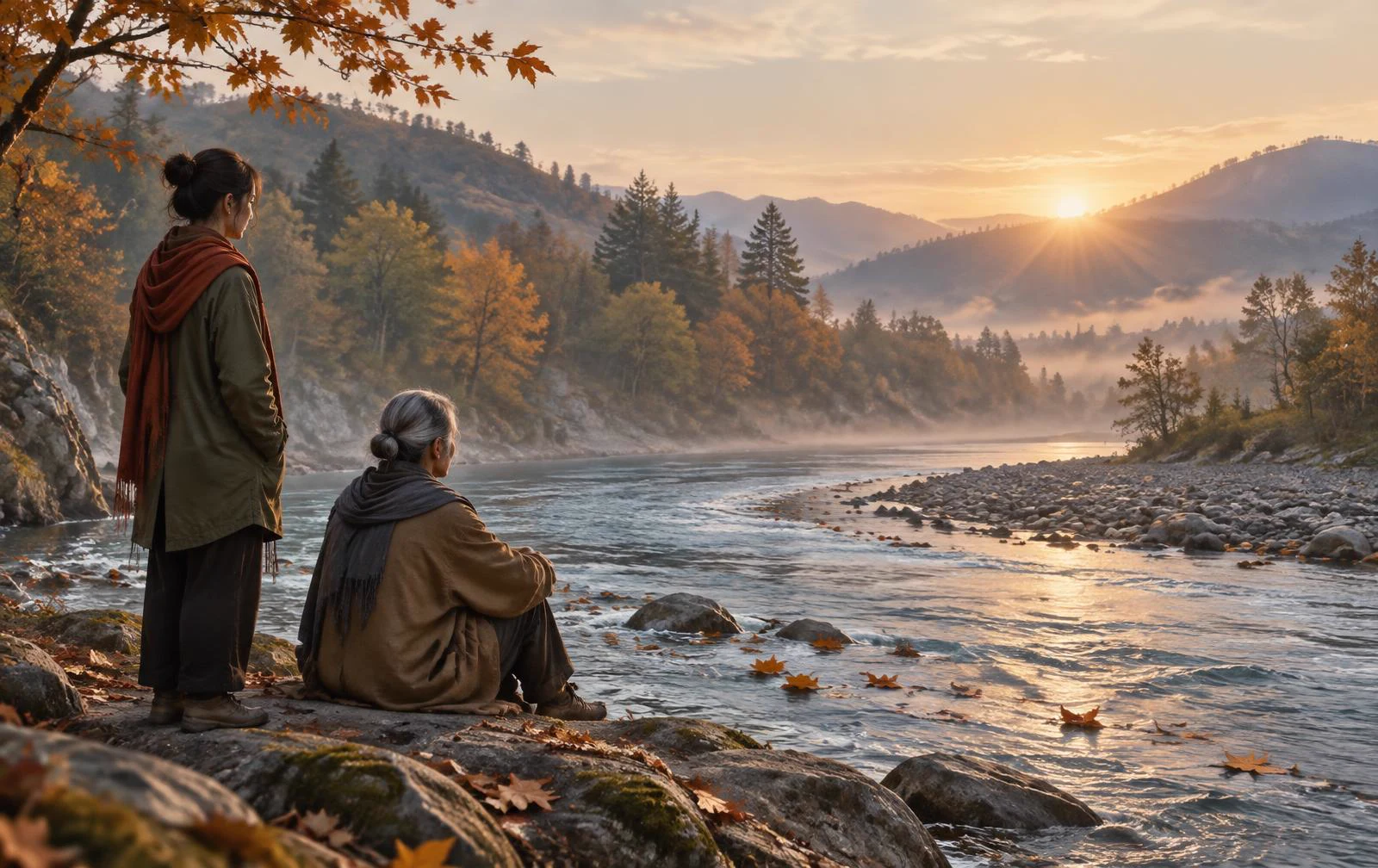
The teacher took her to the river.
“Do you see the water?”
Maya nodded.
“Was it here yesterday?”
“Yes.”
“Is it the same water?”
“No.”
“And tomorrow?”
“No.”
The teacher smiled.
“And yet, the river remains.”
Maya watched the current. Leaves drifted across the water and disappeared around the bend.
She suddenly thought of everything that had already passed through her life — people, places, successes, fears, even the body that had changed through the years.
Everything flowed.
And yet there was something within her that had watched it all pass.
Something that had been there when she was a child.
Something that was here now.
She took a deep breath.
Perhaps she had not lost herself.
Perhaps she had only lost things she once believed were her.
There is something within us that is not carried away by everything that changes — and sometimes, when everything is moving, we can finally feel it.
Brihadaranyaka Upanishad 3.7–3.8; Chandogya Upanishad 6.8.7
“That thou art.”
An original Ohananda story inspired by the Upanishadic distinction between changing experience and the deeper Self, especially the inner witness of Brihadaranyaka Upanishad 3.7–3.8 and tat tvam asi in Chandogya Upanishad 6.8.7. Maya, the teacher and their conversation are fictional, not an ancient account.
The Upanishads distinguish what changes — roles, possessions, circumstances, thoughts and experiences — from the awareness in which those changes are known.
The river does not define that deeper Self; it offers a quiet image for noticing that the contents of a life can keep moving while the capacity to witness them remains.
What has changed around you — and what in you has remained present through it?