Returning to the Root
Short story about a peace that does not depend on the silence between thoughts.

In a small village at the foot of the mountains lived a man named Raphael, who could not find peace.
He tried meditation, read books of wisdom, visited distant monasteries, and spoke with great teachers. Yet each time he thought he had found stillness, another thought returned and disturbed it.
One day, he heard of an old sage who lived alone in the forest, and who was said to have found a peace that depended on nothing.
Raphael set out.
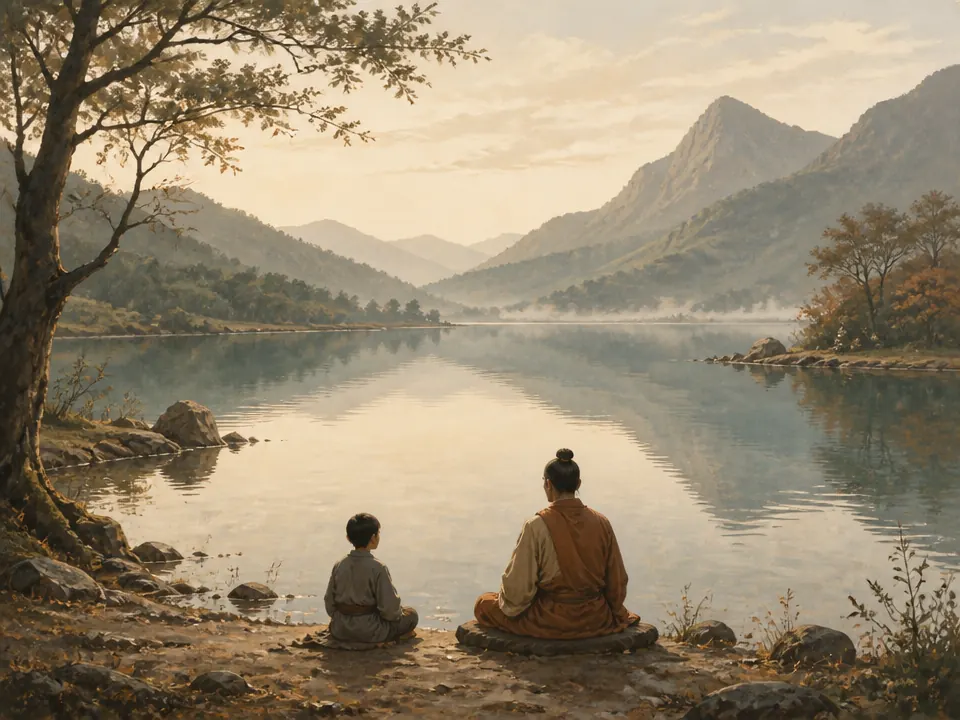
When he arrived, he found the old man sitting beneath a great tree, watching the falling leaves.
“I have come to learn how to quiet my thoughts,” Raphael said. “For years I have been searching for peace, and it always slips away from me.”
The old man did not answer. He simply pointed to the tree.
“What do you see?” he asked.
“A tree.”
“And what is the tree doing?”
“Shedding its leaves.”
“And does it mourn them?”
“I do not think so.”
“And is it afraid they will not grow again?”
“No.”
The old man smiled.
“The tree does not cling to its leaves, nor does it hurry to grow new ones. It lets the seasons come and go, yet its roots remain where they are.”
Raphael was silent for a moment.
“But my thoughts are not leaves,” he said. “They never stop coming.”
“Then let them come,” the old man replied.
“And how will I find peace that way?”
“Tell me, Raphael, do the roots tremble every time the leaves move in the wind?”
Raphael gazed at the tree for a long time.
The wind grew stronger. The branches swayed, the leaves whirled through the air, yet the trunk stood firm.
For the first time in years, Raphael did not try to quiet his thoughts.
He simply sat.
The thoughts came. And the thoughts went.
And he remained.
After a while, he asked softly:
“So all these years, have I been looking for peace in the wrong place?”
The old man smiled.
“You were not looking in the wrong place. You were simply searching among the leaves for what lies in the roots.”
Sometimes, the path to peace is not learning how to stop the wind, but remembering that within us lies a place the wind has never reached.
Tao Te Ching — Chapter 16, attributed to Lao Tzu
“Attain utmost emptiness; abide in steadfast stillness. Returning to the root is tranquility.”
An original fictional Ohananda story inspired by Taoist wisdom in Tao Te Ching, Chapter 16, attributed to Lao Tzu. Raphael, the sage, and their dialogue do not appear in the source and are not a historical account. The quotations above are translated excerpts from the chapter, not original wording of the story; translations vary.
Chapter 16 of the Tao Te Ching invites emptiness and stillness, contemplating the return of all things to their root. Returning is not stopping the movement of life, but recognizing the quiet within it.
The tree is a literary image in this story: thoughts can come and go without our needing to cling to each one. Meditation here is not a battle with the wind, but an invitation to sit and listen.
Questions & answers
+What is the message of "Returning to the Root"?
Sometimes, the path to peace is not learning how to stop the wind, but remembering that within us lies a place the wind has never reached. Chapter 16 of the Tao Te Ching invites emptiness and stillness, contemplating the return of all things to their root. Returning is not stopping the movement of life, but recognizing the quiet within it. The tree is a literary image in this story: thoughts can come and go without our needing to cling to each one. Meditation here is not a battle with the wind, but an invitation to sit and listen.
+Is this a true story?
An original fictional Ohananda story inspired by Taoist wisdom in Tao Te Ching, Chapter 16, attributed to Lao Tzu. Raphael, the sage, and their dialogue do not appear in the source and are not a historical account. The quotations above are translated excerpts from the chapter, not original wording of the story; translations vary.
+Which wisdom tradition inspired this story?
Tao Te Ching — Tao Te Ching — Chapter 16, attributed to Lao Tzu. The strength of what yields.
What might change if you allowed your thoughts to come and go, without trying to stop the wind?