Tao Te Ching
The strength of what yields.
Stories inspired from Tao Te Ching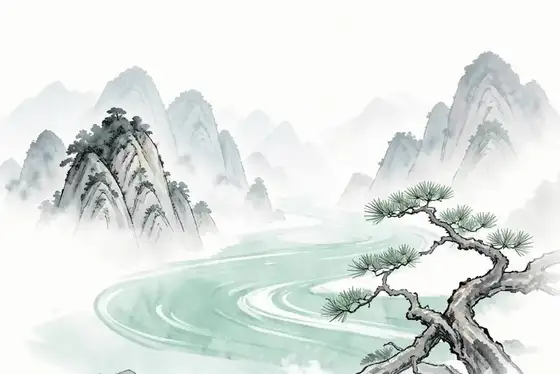
In simple words
Eighty-one short verses, attributed to Lao Tzu, that keep circling one idea: there is a way things move, and wisdom is to move with it.
The Tao Te Ching is suspicious of effort, of cleverness, of the man who forces. Its favourite images are water, valleys, uncarved wood and the empty space that makes a room useful.
Where it comes from
Traditionally credited to Lao Tzu, a keeper of archives who is more legend than biography. Textual scholars see a compilation that stabilised around the 4th–3rd century BCE; the Guodian bamboo slips (c. 300 BCE) are our oldest witnesses.
It is among the most translated books in the world, which matters: English versions differ so widely that reading two is closer to reading two books. We always cite the translator.
Core ideas
- Tao — the way
- A pattern underneath things that cannot be fully said. The book's first move is to admit that words will fail.
- Wu wei — effortless action
- Not passivity: action without friction, timed so well it looks like nothing was done.
- The power of the soft
- Water wears down stone. What bends survives the storm that snaps what is rigid.
- Emptiness as usefulness
- The hole makes the cup. Space, rest and restraint are functional, not wasted.
What does this mean today?
We are trained to solve by pushing harder. Taoism proposes the opposite experiment: find where you are fighting the current, and stop.
In work this looks like timing over force. In relationships it looks like not needing to win. In grief it looks like allowing a season to be what it is.
Go deeper
Common questions
- What does Taoism teach about control?
- That most control is illusion bought at high cost. The Tao Te Ching repeatedly suggests that things arrive more reliably when we stop forcing them, and that governing — of a state or a life — works best with a light hand.
- What is wu wei?
- Usually translated “effortless action” or “non-forcing”. It means acting in accordance with the situation so that effort is minimal and appropriate, not doing nothing at all.
- Who wrote the Tao Te Ching?
- Tradition names Lao Tzu; scholarship treats the text as a compilation of older sayings that stabilised by the 4th–3rd century BCE.