The Gardener Who Stopped Pruning
Short story about the difference between tending and forcing.
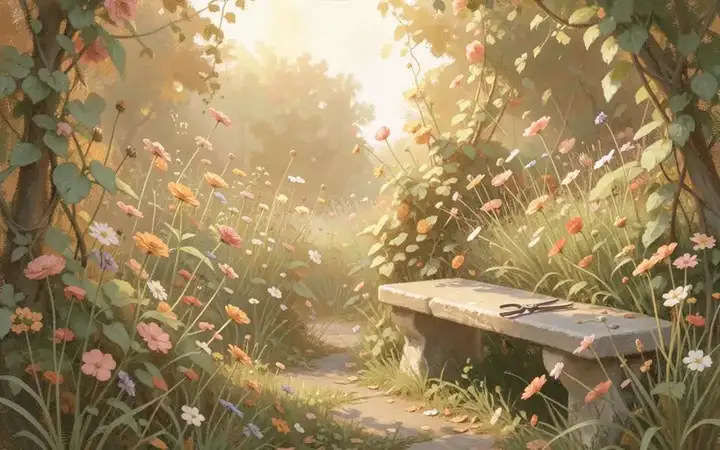
The garden came with the house, and so did her mother's notebook — forty years of instructions in faded pencil. When to cut back the wisteria. How short to take the lavender before it went woody. A war against disorder, dated and cross-referenced.
She followed it faithfully for two summers and began, without quite admitting it, to dread Saturdays.
In the third summer she was sick for six weeks — nothing serious, just enough to keep her indoors while the garden did whatever it wanted. The lavender went leggy and slumped across the path. The wisteria worked its way behind a gutter and pulled it half loose. Two plants she had never once put in the ground came up flowering by the back wall.
When she was well enough to look properly, she noticed something else: the garden, unsupervised, was full of bees in a way it had never been under her mother's rules.
So she made her own decisions instead of following old ones. She cut the wisteria back, because the gutter was a real problem, not an aesthetic one. She left the lavender alone, because its sprawl was hurting nothing but her mother's memory of order. She read the rest of the notebook differently after that — as one woman's taste and worry, written down as if it were law, rather than as the law itself.
By September the garden was messier than it had ever been in her lifetime, and fuller, and she no longer flinched at the sight of a Saturday on the calendar.
Some things grow because we tend them. Others grow the moment we stop interfering.
Tao Te Ching ch. 48 and 64
“The way of heaven is to accomplish without striving.”
A paraphrase of a recurring theme in chapters 48 and 73; the story is Ohananda's own.
Wu wei is usually translated as effortless action, but it works better as restraint: do what the situation needs, and nothing extra.
Notice what the gardener does not do. She does not abandon the garden. Wu wei is not neglect — it is the removal of the war.
Questions & answers
+What is the message of "The Gardener Who Stopped Pruning"?
Some things grow because we tend them. Others grow the moment we stop interfering. Wu wei is usually translated as effortless action, but it works better as restraint: do what the situation needs, and nothing extra. Notice what the gardener does not do. She does not abandon the garden. Wu wei is not neglect — it is the removal of the war.
+Is this a true story?
A paraphrase of a recurring theme in chapters 48 and 73; the story is Ohananda's own.
+Which wisdom tradition inspired this story?
Tao Te Ching — Tao Te Ching ch. 48 and 64. The strength of what yields.
Which of your rules are actually yours — and which did you simply inherit?