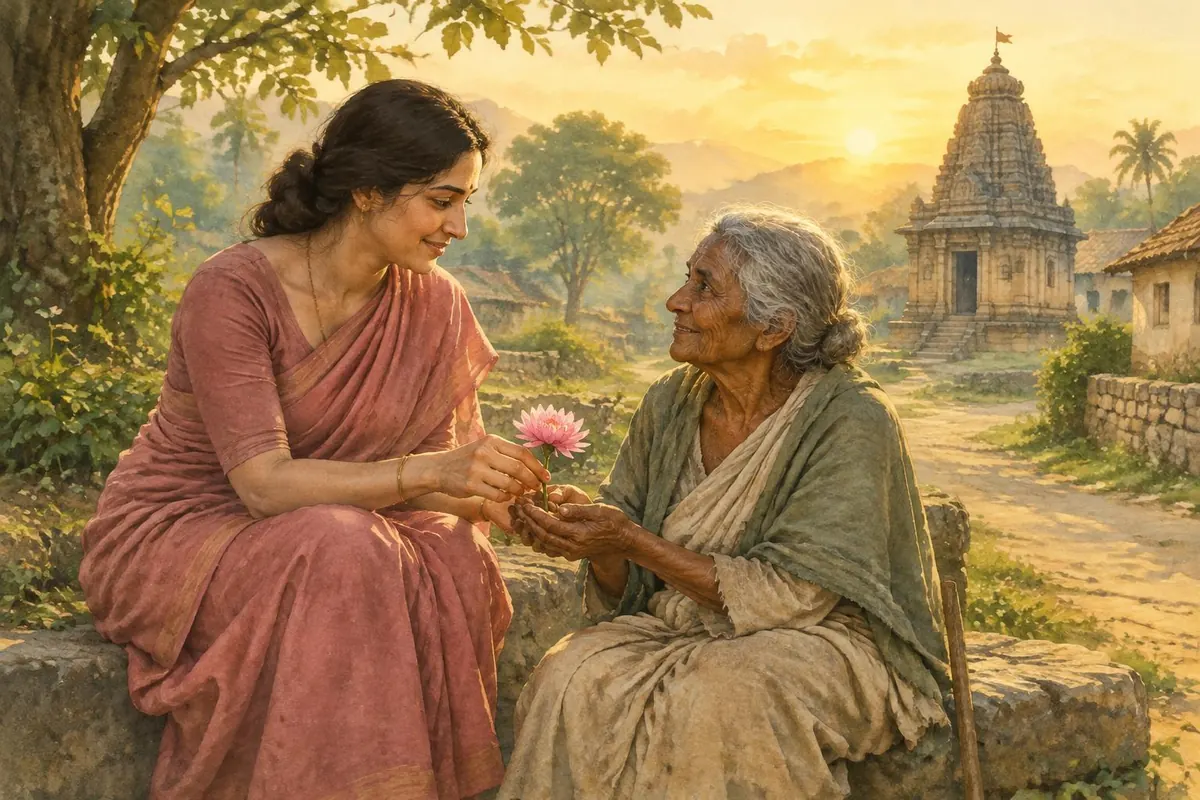
The Place She Kept
Short story about love finding a place within grief.
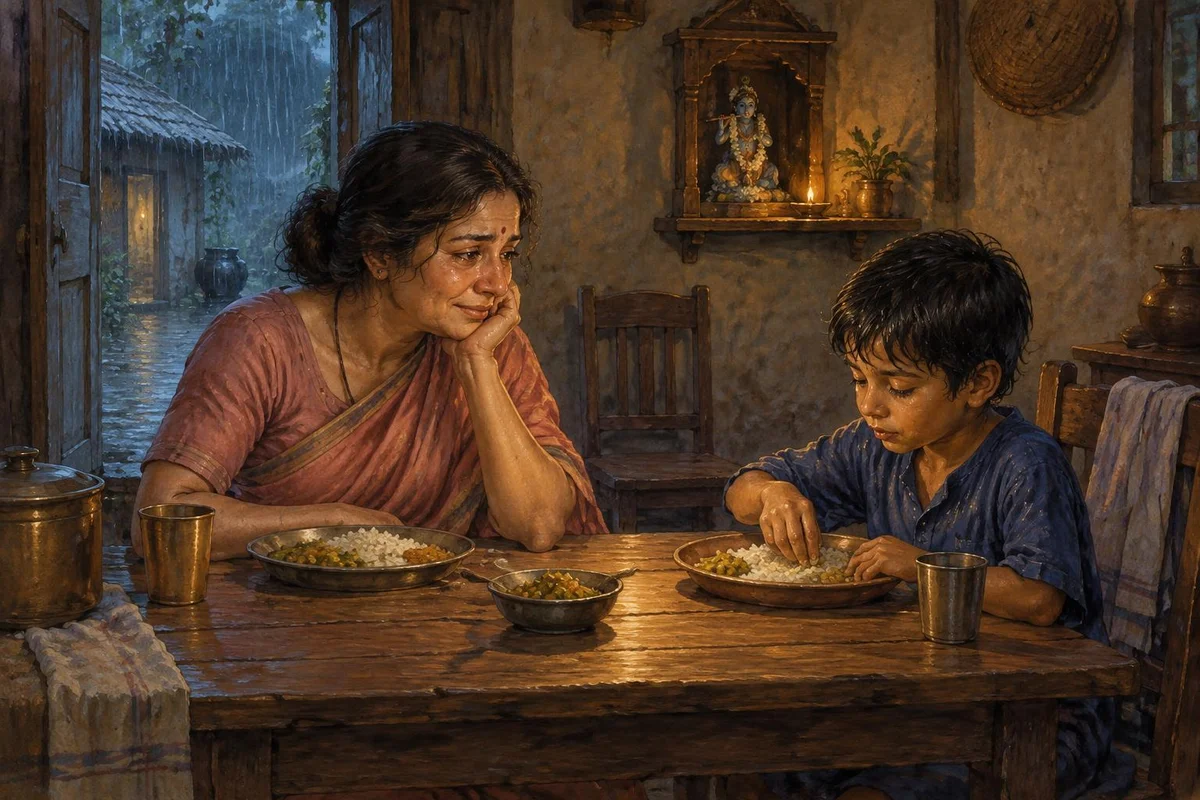
Every evening, Tara placed two plates on the small wooden table in her home.
One for herself, and one for her daughter, Emily.
Even three years after Emily's death, Tara could not bring herself to stop.
"Mother," her son would gently say, "you know she's not coming back."
"I know," she would answer.
But the plate remained.
Once, when Emily was seven, she had asked her mother why she sang to Krishna every morning.
"Because I love Him," Tara replied.
"But how can you love someone you can't see?"
Tara smiled. "Just as you love me even when I'm not in the room."
Emily thought for a moment, then wrapped her arms around her mother.
"Then I love Him too. But I love you more."
Tara laughed. It was one of the few memories that could still bring a smile to her face.
After Emily died, Tara stopped singing.
One morning, sitting before an image of Krishna, she burst into tears.
"Everyone says You are love," she whispered. "Then where were You when she needed You?"
She waited.
No answer came.
"I don't want Your silence," she said angrily. "I want my little girl."
That morning, she did not even light the candle.
That evening, someone knocked at the door.
A small boy stood outside, soaked by the rain, holding an empty bowl.
"My mother is sick," he said. "Do you have any food?"
Tara looked at the two plates on the table.
For a moment, she wanted to close the door.
But the boy was shivering.
She brought him inside, seated him in Emily's chair, and filled the second plate with warm rice.
The boy ate quietly.
When he finished, he looked up at her.
"You know, your eyes look like my mother's."
Tara felt something break inside her.
She knelt beside him and gently brushed his wet hair away from his forehead.
"I had a little girl too," she whispered.
"Where is she?"
Tara struggled to breathe.
"I don't know," she finally answered. "But I miss her every day."
The boy was silent for a moment. Then he placed his small hand against her cheek.
"Maybe she misses you too."
Tara began to sob.
Not the quiet, polite tears she had learned to cry, but the sobs of a mother who had carried, for far too long, a love with nowhere to go.
And the boy, not knowing what to say, simply held her.
When he left with another bowl of food for his mother, Tara remained alone beside the table.
Emily's plate was empty.
She ran her fingers over it, just as she once stroked her daughter's cheek before bedtime.
Then, without meaning to, she began humming her old song to Krishna.
Her voice broke halfway through.
She kept singing anyway.
That night, she found no answer to why her daughter had died.
Nor did she feel that the Divine had given anything back to her.
But she remembered what she had once told Emily:
"You can love someone even when you cannot see them."
The next morning, Tara lit the candle again.
And that evening, she placed two plates on the table.
One for herself.
And one for whoever might be hungry.
She never stopped missing her daughter. She simply discovered that the love remaining in her heart could still hold someone.
Bhakti Yoga: The Path of Devotion
An original fictional Ohananda story inspired by the Bhakti tradition, Prema and Seva. Tara, Emily and the encounter with the boy are literary creations, not an ancient account, a historical event or a quotation from scripture.
In the Bhakti tradition, Prema represents deep, pure love for the Divine, while Seva is selfless service offered with love and devotion.
This story explores how love can continue to flow even through a broken heart, not by denying grief, but by allowing compassion to reach others.
Bhakti does not promise that we will never lose those we love, or that we will understand why loss happens. It offers a path in which love does not have to end when physical presence ends.
Some love can no longer reach the person it was meant for. But it can still illuminate the world.
Questions & answers
+What is the message of "The Place She Kept"?
In the Bhakti tradition, Prema represents deep, pure love for the Divine, while Seva is selfless service offered with love and devotion. This story explores how love can continue to flow even through a broken heart, not by denying grief, but by allowing compassion to reach others. Bhakti does not promise that we will never lose those we love, or that we will understand why loss happens. It offers a path in which love does not have to end when physical presence ends.
+Is this a true story?
An original fictional Ohananda story inspired by the Bhakti tradition, Prema and Seva. Tara, Emily and the encounter with the boy are literary creations, not an ancient account, a historical event or a quotation from scripture.
+Which wisdom tradition inspired this story?
Bhakti Yoga — Bhakti Yoga: The Path of Devotion. Love and devotion made visible in how we meet others.
What love remaining in your heart might find a place today in a small act of compassion?