Bhakti Yoga
Love and devotion made visible in how we meet others.
Stories inspired from Bhakti Yoga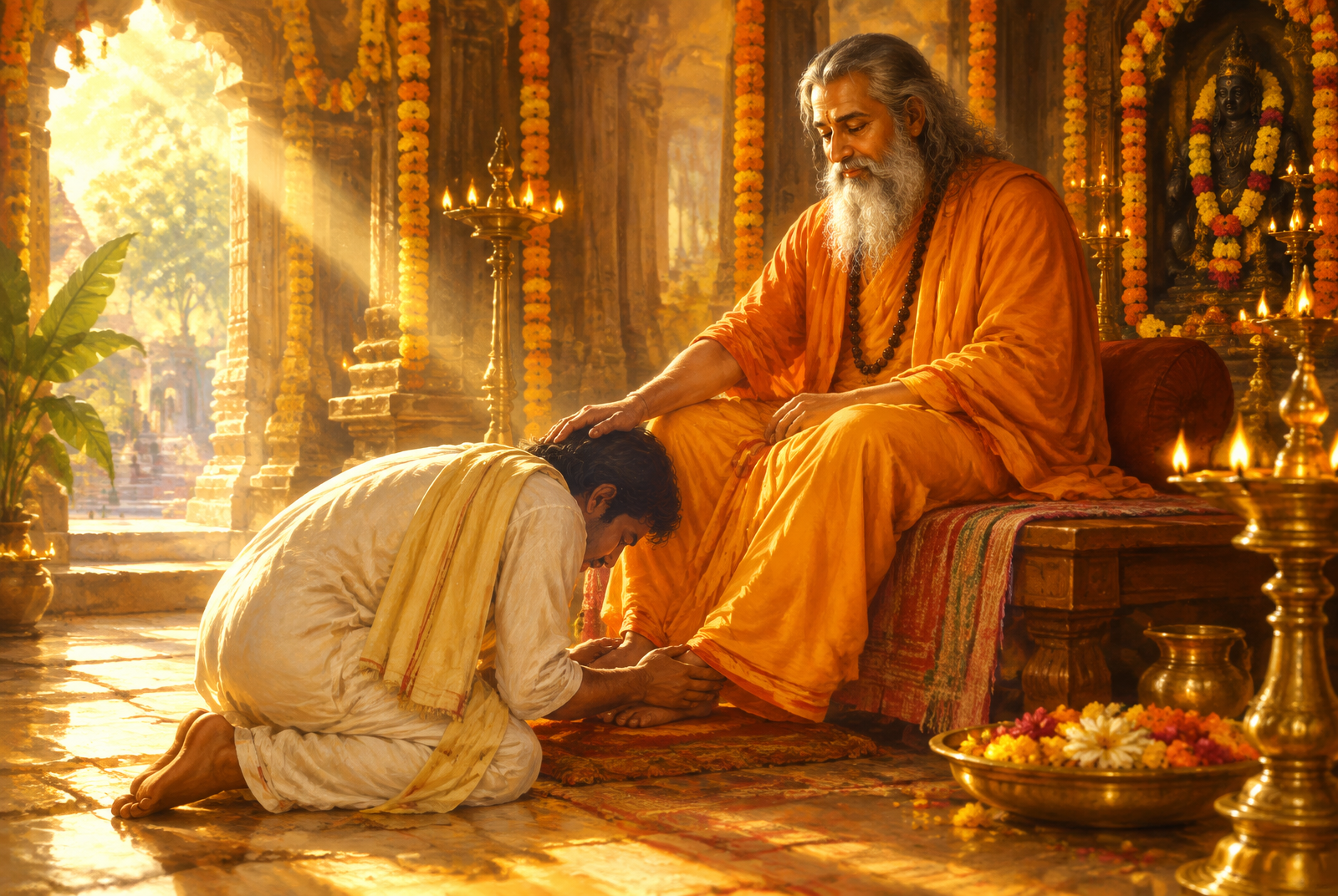
In simple words
Bhakti Yoga is the path of devotion: directing love toward the Divine and allowing that love to shape ordinary action.
Its practice can be intimate and practical — prayer, gratitude, service, and learning to meet another person without first measuring status or appearance.
Where it comes from
Devotional currents appear in early Indian texts and become especially prominent in the Bhagavad Gita, the Bhagavata Purana, and the songs of poet-saints across India.
Bhakti has never been one single institution. Its languages, forms, and beloved figures differ by region, while love and wholehearted devotion remain at its center.
Core ideas
- Devotion through relationship
- The Divine is approached through love rather than argument alone.
- Seeing the sacred in others
- Respect and care can become forms of devotion when every person is met as bearing sacred worth.
- Service as love in action
- A simple act of help can carry devotion out of prayer and into daily life.
What does this mean today?
Bhakti asks what changes when gratitude becomes a way of receiving encounters rather than a response reserved for pleasant outcomes.
In daily life, this can mean listening before judging, serving without calculating status, and treating attention itself as an offering.
Common questions
- What is Bhakti Yoga?
- Bhakti Yoga is a path of love and devotion in Indian spiritual traditions, practiced through prayer, remembrance, gratitude, song, and service.
- Does Bhakti require withdrawing from ordinary life?
- No. Many Bhakti traditions understand ordinary relationships and acts of care as places where devotion can be practiced.