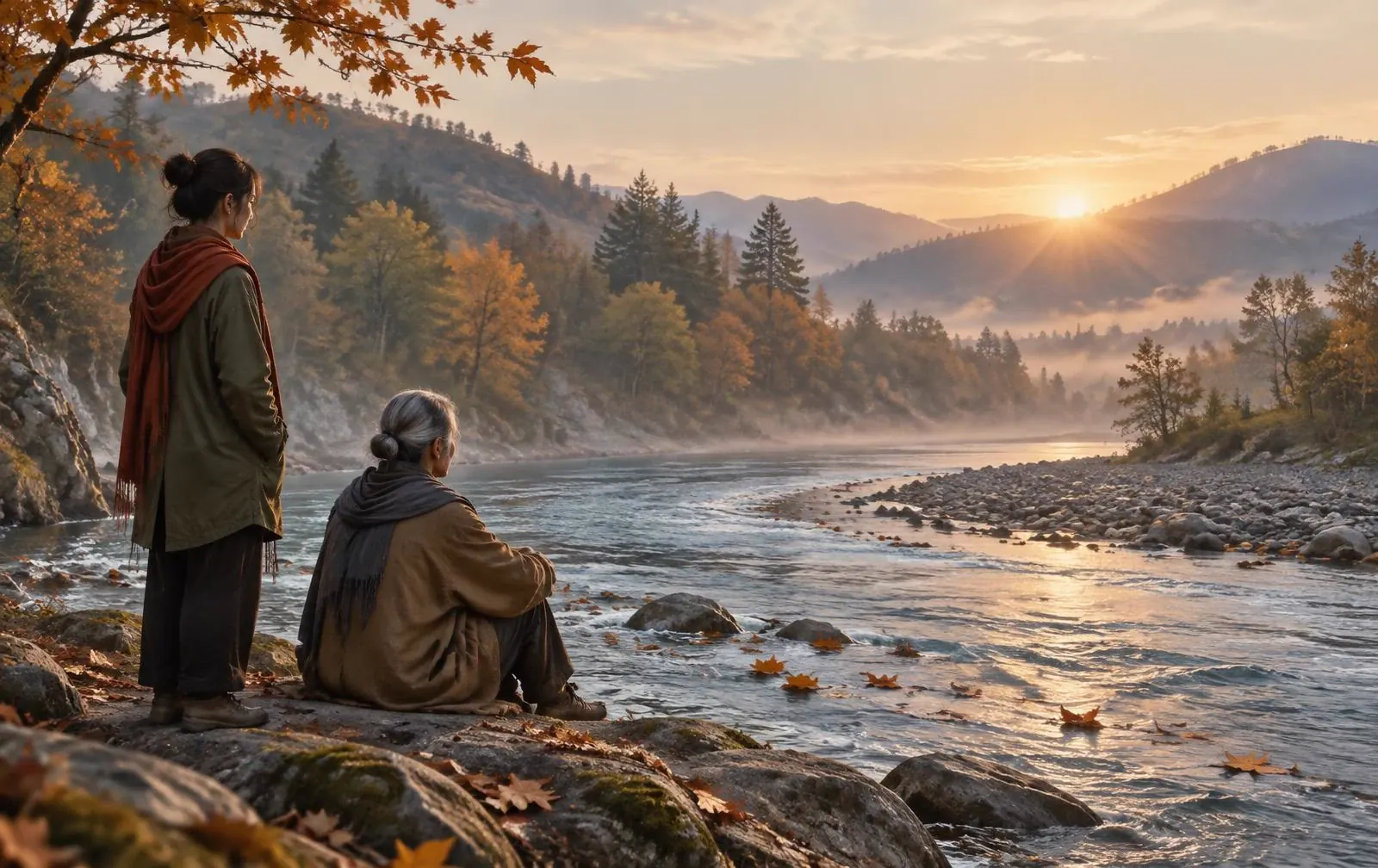
The Drop That Feared the Ocean
Short story about love that does not end, and the ocean we all belong to.
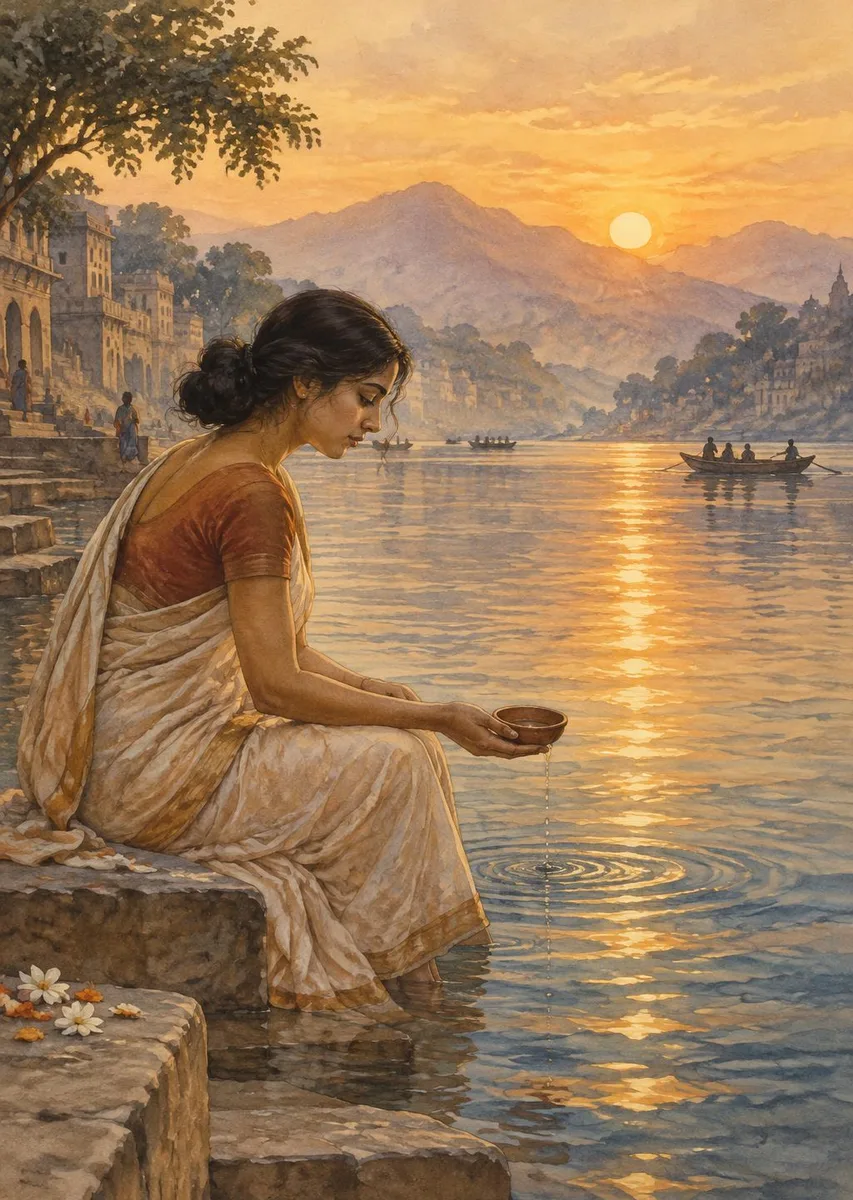
In a small village on the banks of the Ganges lived a girl named Neela.
Her father was a fisherman. Every morning, before the sun rose, they went down to the water together.
“Look,” her father once said, reaching his hand toward the river. “These waters came from the mountains, and one day they will reach the sea.”
“And this drop?” Neela asked, lifting a drop on the tip of her finger.
“That one too,” her father smiled. “Nothing here is truly separate.”
Neela loved those words, though she never fully understood them.
When she was seventeen, her father did not come back from the river.
One storm, one boat, one man the world no longer held.
Grief struck her like a wave. She stopped going down to the water. She stopped speaking.
At night she sat on the bank and asked the river how it dared to keep flowing, as if nothing had happened.
One evening she found an old man sitting there quietly, his face turned toward the sunset.
“You are grieving for someone you loved,” he said. He did not ask — he said it.
“He was my ocean,” Neela said. “And now I am alone.”
The old man lifted a small clay bowl, filled it with river water, and held it out to her.
“What do you see?”
“Water.”
“And now,” he said, and poured the water back into the river. “Where did it go?”
“Back to the river.”
“And was it lost?”
Neela was silent.
“The drop fears the ocean,” the old man said, “because it thinks it will disappear. But when it falls in — it does not vanish. It becomes the ocean.”
Something inside Neela opened, slowly, like a door that had not opened in years.
Her father had not vanished. His love had not vanished. It had simply returned to the waters it came from.
From that day on, Neela went back to the river.
She began helping the old fishermen haul their nets. She brought soup to the widow at the edge of the village. She taught the fishermen's children to read.
And every time she gave something, she felt her father near — not as a memory, but as a current.
Years passed. Neela had a son.
One evening, as the sun set in gold over the Ganges, they sat together on the bank.
“Mama,” the boy asked, “where do people go when they die?”
Neela looked at the water. A single drop leapt from the current and fell back without a sound.
And she answered him with what her father had taught her, and what the old man had shown her, and what her heart had known all along:
We think we are separate drops. But deep within... we are all the same ocean.
Chandogya Upanishad 6.8–6.10
“Tat Tvam Asi — Thou Art That.”
An original Ohananda story inspired by the teaching of tat tvam asi ('Thou Art That') in Chandogya Upanishad 6.8–6.10 and its image of rivers merging into the sea. Neela, her father, the old man and their conversations are fictional, not an ancient Upanishadic text.
Tat Tvam Asi — 'Thou Art That' — is one of the great sayings of the Upanishads. In the Chandogya Upanishad (6.8–6.10), the sage Uddalaka teaches his son Shvetaketu that the deepest Self (Atman) and ultimate reality (Brahman) are not two separate things.
In chapter 6.10, the text compares the relationship between the individual and the whole to rivers flowing into the sea: just as rivers merge into the ocean and no longer say 'I am this river' or 'I am that river,' so all beings return to the one source, even without knowing it.
Neela's story is an original Ohananda work of fiction inspired by this ancient teaching — the characters and their dialogue are not an Upanishadic text.
Questions & answers
+What is the message of "The Drop That Feared the Ocean"?
The story teaches that love does not vanish with death — it returns to the great ocean we all belong to, and keeps flowing through our acts of kindness. Inspired by the teaching of tat tvam asi ('Thou Art That') in Chandogya Upanishad 6.8–6.10.
+Is this a true story?
An original Ohananda story inspired by the teaching of tat tvam asi ('Thou Art That') in Chandogya Upanishad 6.8–6.10 and its image of rivers merging into the sea. Neela, her father, the old man and their conversations are fictional, not an ancient Upanishadic text.
+Which wisdom tradition inspired this story?
Upanishads — Chandogya Upanishad 6.8–6.10. The turn inward.
Perhaps we cannot keep those we love beside us forever — but how can we allow their love to live on through the way we touch the lives of others?
Love does not end where togetherness ends. It continues to flow.